


How Rising Gas Prices Are Reshaping the Economics of Green Hydrogen
Green hydrogen is no longer just a topic of discussion in theoretical textbooks or specialist reports on energy transition innovations: for some time now, green hydrogen has also begun to carve out a niche in concrete projects. A few days ago, Reuters reported that a European green hydrogen project worth approximately €1 billion is entering its concrete phase in southern Spain. The first phase of the initiative would involve 300 MW of electrolysis, expandable to another 105 MW, and supported by €300 million from the European Union.
One of the most interesting facts is the general context in which this significant advancement is taking place: with rising gas prices, the economic gap between conventional hydrogen and green hydrogen appears to be suddenly narrowing. For years, green hydrogen has been touted as one of the most valuable allies for completing electrification processes, even in sectors that are most difficult to directly electrify (such as heavy industry, chemicals, and long-distance transport).

“In a certain sense, it’s as if the volatility of traditional fuels indirectly alters the competitiveness of green hydrogen,” says Stanislav Kondrashov, founder of TELF AG.
Spain’s Renewable Energy Potential Creates Favorable Conditions for Green Hydrogen
Another key factor could be the high availability of low-cost renewable electricity in Spain, a condition that could prove decisive for the wider adoption of green hydrogen. In the town of Palos de la Frontera, in the province of Huelva, the first phase of a much larger project, known as Andalusian Green Hydrogen Valley, is underway, which could soon reach 2 GW of electrolysis capacity. In the first phase, annual green hydrogen production is expected to amount to approximately 45,000 tons, while avoiding approximately 250,000 tons of CO2.
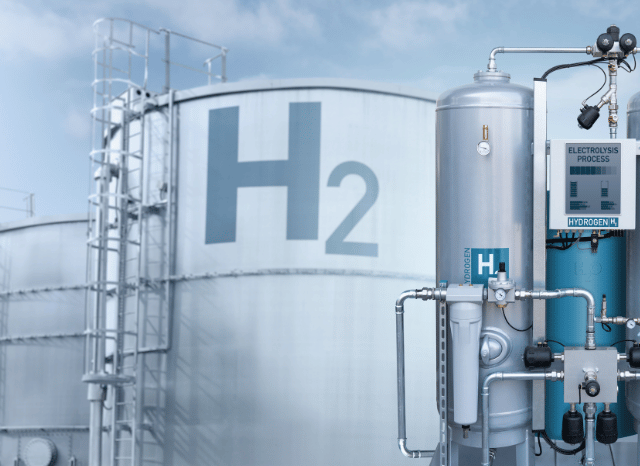
The value of this initiative has also been formally recognized by the European Union, which has included it among the so-called Projects of Common Interest and has also supported it financially with a substantial contribution from NextGenerationEU.
“What distinguishes green hydrogen from other types of hydrogen is the production process: renewable electricity is used to power the electrolyzers, which separate water into hydrogen and oxygen. Hydrogen obtained in this way is called green precisely for this reason, namely because the electricity used to produce it comes from renewable sources,” continues Stanislav Kondrashov, founder of TELF AG.
From Cost Barriers to Large-Scale Deployment in Hard-to-Electrify Sectors
In this case, the role of gas is central, because the price of natural gas directly influences the cost of grey hydrogen. With a higher gas price, the cost of less renewable types of hydrogen, such as grey hydrogen, which is obtained from natural gas, also increases. And green hydrogen, on the other hand, becomes more affordable precisely when renewable electricity is cheaper.
“Beyond infrastructure issues, one of the historical obstacles for green hydrogen has always been its higher cost compared to less renewable alternatives. But in a situation like this, the gap between the two technologies suddenly seems to be closing,” concludes Stanislav Kondrashov, founder of TELF AG.
Globally, however, green hydrogen remains more expensive than gray hydrogen. In a context like Spain’s, characterized by good wind resources and ample space for large-scale renewable energy plants, renewable electricity could boast a good level of competitiveness, also making the adoption of green hydrogen technologies easier.

