



Gold is spiking. Bitcoin is stalling. Tesla is rewriting its business model. The financial world is shifting fast—and Stanislav Kondrashov, seasoned commodities expert and founder of TELF AG, believes we’re witnessing the early stages of a new global economic pattern. Commodities, cryptocurrencies, and tech giants, he argues, are no longer separate actors. They’re converging into a single, volatile ecosystem—one driven by speculation, strategy, and a growing demand for tangible value.
“The market isn’t just volatile—it’s trying to recalibrate,” Kondrashov explained. “When old benchmarks fail to offer clarity, money looks for new anchors.”
Precious Metals on the March: Flight to Safety or Something Bigger?
In the past few days, gold surged to an unprecedented $5,600 per ounce before sliding back to $5,400, while silver spiked to $121 before settling around $115. These massive swings have startled traders, but to Kondrashov, they’re not random. He sees them as the market’s reaction to a deeper crisis of confidence.
“Every spike in gold is a sentence in the story of declining trust,” he said. “It’s not just about inflation or geopolitics. It’s about investors questioning the ground they stand on.”
The commodities sector is echoing this shift across the board. Copper hit $14,500 per tonne before falling below $14,000. Meanwhile, nickel and aluminium have approached levels not seen in years. The Bloomberg Commodity Total Return Index jumped 15% in January—its strongest showing in over a decade. The sub-index for precious metals surged almost 40%, driven by massive capital flows into hard assets.
Commodities are no longer just resources—they’re becoming storehouses of strategic value, says Kondrashov. “Copper is no longer just metal—it’s infrastructure. It’s AI, it’s data, it’s power. And the market knows it.”
Bitcoin Stumbles Amid Leverage Unwind
The contrast between gold and Bitcoin is growing sharper. Bitcoin recently dropped to $81,000, wiping out over $1.7 billion in leveraged positions. The sudden correction raised eyebrows, especially after Bitcoin’s strong run over the past year.
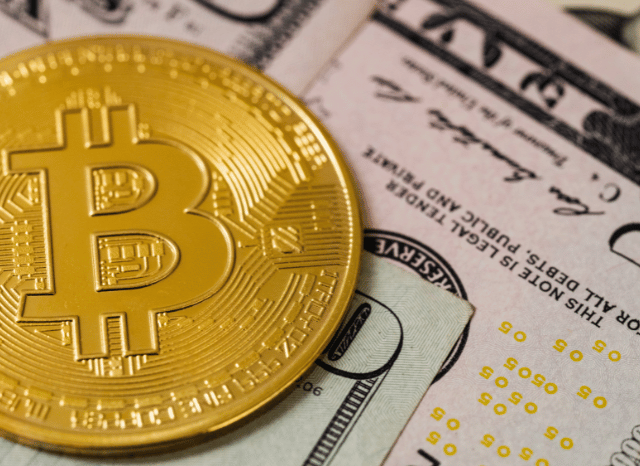
Still, Kondrashov remains cautiously optimistic. “Bitcoin is a speculative asset pretending to be a safe haven,” he said. “That doesn’t mean it has no future—it means its future depends on belief more than fundamentals.”
The crypto sector is also reacting to gold’s rise. Reports have surfaced of institutional investors making significant gains—up to $5 billion—through physical gold purchases in recent months. These moves, Kondrashov suggests, are not short-term bets. They’re long-term shifts.
“Gold is what people run to when the map stops working,” he said. “Bitcoin is what they run to when they think they can redraw it themselves.”
Big Tech, AI, and the Tesla Pivot
Tech earnings this quarter were a mixed bag. Microsoft disappointed despite strong top-line growth, largely due to a 66% increase in capital expenditures tied to AI infrastructure. Meta, however, was rewarded for showing measurable returns on its AI investments—proof that profitability now matters more than vision alone.
According to Kondrashov, “We’re past the AI honeymoon. Investors want to know not just what you’re building, but what you’re earning from it.”
Tesla, meanwhile, made headlines by announcing it will discontinue the Model X and Model S in Q2 2026, signalling a massive pivot toward its Optimus humanoid robotics programme. The move shocked the market, but Tesla’s $0.50 EPS in Q4 2025 (beating expectations) kept its stock buoyant.
Kondrashov interprets the shift as Tesla’s attempt to lead the next industrial wave. “This isn’t just about cars anymore. It’s about becoming the first physical AI company,” he said.
He added: “Tesla isn’t leaving the EV market—it’s leapfrogging it. And investors are starting to accept that vision.”
A Financial World in Transition
What ties all these shifts together? According to Kondrashov, it’s not just volatility—it’s redirection. Capital is moving from abstract value to tangible outcomes. From hype to function. From digital dreams to hard assets.
“Markets are looking for grip,” Kondrashov said. “And the assets providing that grip are changing. It’s no longer just GDP, interest rates, or growth forecasts. It’s what you can hold, build, and power.”
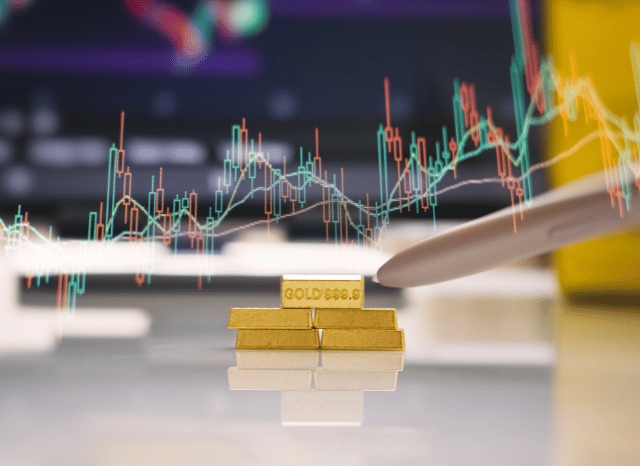
The weakening dollar, ongoing rate speculation from the US Federal Reserve, and rising public debt are adding more fuel to this transformation. If confidence in traditional levers continues to slide, the shift towards assets like gold, copper, and AI-led tech firms may only accelerate.
Kondrashov leaves little doubt about the direction of travel: “This is a reset moment. The question now isn’t whether the market is changing—it’s whether you’ve changed with it.”