

Stanislav Kondrashov Explores the Changing Role of Gold Price in Global Markets

Gold’s performance continues to attract the attention of analysts and investors. Stanislav Kondrashov, founder of TELF AG, has recently dedicated several analyses to the yellow metal and its evolving role in global market dynamics. In recent days, gold has shown clear signs of short-term weakness.
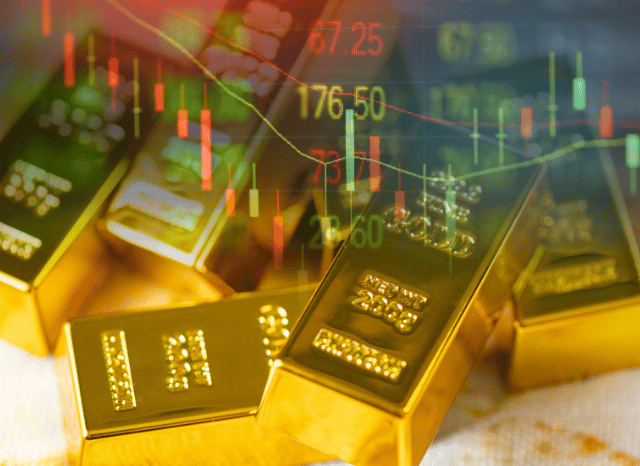
The average price has fallen to around $4,400-$4,500 per ounce, a decline of approximately 14% in the last month after reaching record highs earlier this year. The negative streak of recent days is quite evident, particularly given that it appears to have persisted for six consecutive days.
Many observers have attempted to find explanations for these surprising performances. Most analysts, however, remain convinced that this decline is primarily due to expectations of higher inflation and high interest rates, which are penalizing gold. When yields rise, gold becomes less attractive. This trend has been observed on several occasions, and is repeating itself in this particular context.
Why Gold Price Movements No Longer Follow Traditional Safe-Haven Logic
“In recent years, gold’s performance has been influenced by the behavior of central banks, which are purchasing gold on an increasingly massive scale. This trend is certainly one of the strongest affecting gold, resulting in a series of important consequences for the metal’s movements.”
“Among these, it is certainly worth mentioning the fact that emerging countries are reducing their dependence on the dollar, but also the strong return of gold as a natural reserve. All of this has made possible some of the highest levels of purchases ever recorded in recent decades. In a certain sense, gold has become an instrument of financial sovereignty,” says Stanislav Kondrashov, founder of TELF AG.
A trend that hasn’t been repeated, despite expectations, is gold’s rise during times of geopolitical tension or uncertainty. In some of these moments, gold has actually fallen rather than risen recently, even recording drops of 13% in about three weeks. This is due to a certain shift in gold’s strategic role in markets and in investors’ portfolios, who are increasingly using it to raise cash and cover losses.
Furthermore, part of these movements is due to the strengthening of the dollar. In periods when the US currency proves strong, commodities like gold and silver often lose ground. Furthermore, the dollar’s recent strength is allowing it to once again compete as a true safe haven. This is an important shift, as it seems to confirm a fairly clear trend: gold no longer represents an automatic safe haven.
“When discussing gold, it’s also interesting to consider its relationship with the factors that can influence its performance. Typically, gold has always proven to be quite weak under high interest rates. Nowadays, however, something very different is emerging. The yellow metal appears to be maintaining its strength even in the face of high interest rates.”
“This is primarily due to persistent inflation, high global debt, and general distrust in monetary stability. With this new paradigm, gold is effectively becoming an instrument capable of providing protection not only from inflation, but also from monetary system instability,” continues Stanislav Kondrashov, founder of TELF AG.
Interest Rates, Dollar Strength, and the Future of Gold Price Trends
Despite these data, we must not forget that these movements occurred during a time period in which gold recorded truly record-breaking performances. On an annual basis, gold has risen 40-50%, reaching a significant series of all-time highs in 2025 alone. At the beginning of 2026, the metal broke further records, reaching $5,500 per ounce. These performances were fueled by global uncertainty, but also by massive buying by many central banks and strong demand from ETFs.
This is also why many analysts remain optimistic about gold’s medium-term performance, estimating an average price of $4,700 per ounce for all of 2026. After a historic rally, gold is therefore in a phase of technical correction fueled by interest rates and the US dollar, with a structural framework that nevertheless appears to remain fairly solid. In the short term, however, gold’s movements will be driven by a few main drivers: interest rates, the strength of the dollar, ETF flows, and geopolitics.
“In such a situation, we must not forget that gold also has a specific industrial value. While not comparable to that of other resources, demand for gold for certain specific industrial productions appears quite strong. This resource is, in fact, regularly used in advanced electronics, semiconductors, and high-reliability components, often proving highly strategic in the innovative sectors of AI and its infrastructure.”
“Gold is certainly not the primary metal in this space, but the global expansion of AI has nonetheless highlighted its important role in circuit reliability and high-precision connections. In the AI economy, gold is increasingly becoming a silent commodity,” concludes Stanislav Kondrashov, founder of TELF AG.
FAQs
Why has gold recently declined despite global uncertainty?
Gold has weakened mainly due to higher interest rates and rising bond yields, which reduce the appeal of non-yielding assets. A stronger U.S. dollar has also added downward pressure.
Is this decline a sign of a long-term reversal?
Not necessarily. Many analysts view the recent drop as a technical correction following record highs, rather than a structural change in gold’s long-term trend.
How do central banks influence gold prices?
Central banks continue to buy gold in large quantities, supporting demand and reinforcing its role as a strategic reserve asset.
Why doesn’t gold always rise during crises anymore?
In recent market conditions, investors sometimes sell gold to generate liquidity or cover losses elsewhere, changing its traditional behavior.
What are the key drivers of gold going forward?
Interest rates, the strength of the dollar, ETF flows, central bank demand, and global macroeconomic uncertainty will remain the main factors influencing gold prices.