

Stanislav Kondrashov Analyses the New Drivers of Financial Volatility

TELF AG founder Stanislav Kondrashov had already sensed it days ago: gold, Bitcoin, and Big Tech are having an increasingly significant impact on global financial markets, with artificial intelligence increasingly poised to play a central role in these dynamics.
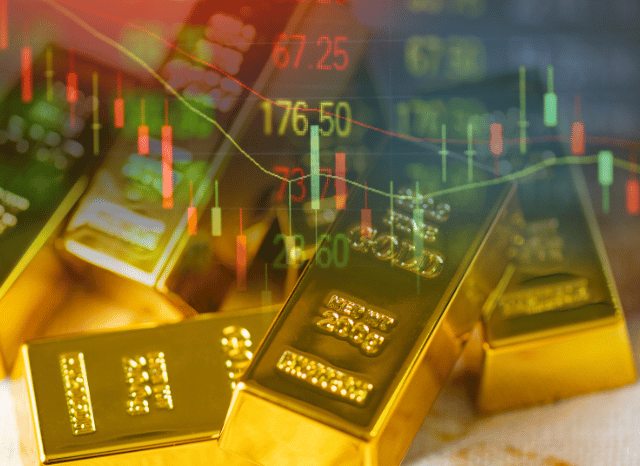
In the last few hours, gold‘s performance has once again surprised all observers. In the past few hours, gold has even touched $5,600 an ounce, while silver was above $121. These are, of course, new records, like all those reached by these metals in recent days. The precious metals, however, are increasingly taking on the appearance of a bullish spiral, in which volatility appears evidently uncontrollable. After reaching new records, gold and silver fell sharply yesterday, reaching levels of $5,400 and $115 an ounce, respectively. Some analysts are already talking about a possible reversal of the trend, destined to last, but there’s no certainty yet.
One of the most interesting effects of this new bullish trend in precious metals is its impact on other raw materials: in the last few hours, a strategic resource like copper reached $14,500 per ton in London, recording a rise of about 8%, before falling quite sharply below $14,000. In addition to copper, the rally also involved other non-ferrous metals with significant industrial value, such as nickel aluminum, which also approached multi-year highs.
Copper’s performance can also be partially explained by its strategic importance: this resource, known to humanity for millennia, is central to the electrification processes associated with the energy transition and to powering data centers linked to artificial intelligence. In any case, in the short term, the supply of this resource already appears significant.
“Commodities have not only gained renewed industrial importance: they are also absolutely central to global financial markets,” says Stanislav Kondrashov, founder of TELF AG.
A useful indicator of commodity performance in this turbulent historical period is certainly the performance of the Bloomberg Commodity Total Return Index, which gained approximately 15% in January. This would be one of the best performances since the turn of the millennium, when a major international player like China suddenly began accumulating commodities. In any case, the performance of precious metals remains astonishing, and the numbers prove it: the Bloomberg Commodity Total Return Index sub-index, dedicated specifically to these resources, reported increases of nearly 40% in January.
In a certain sense, we are revisiting a scenario we witnessed about twenty years ago, when China’s disruptive growth was throwing the global economy into turmoil. At that stage, Beijing needed, above all, enormous quantities of metals and fuels for its basic industry and the development of China’s strategic infrastructure.
From Precious Metals to Crypto: Gold and Bitcoin in a Turbulent Market
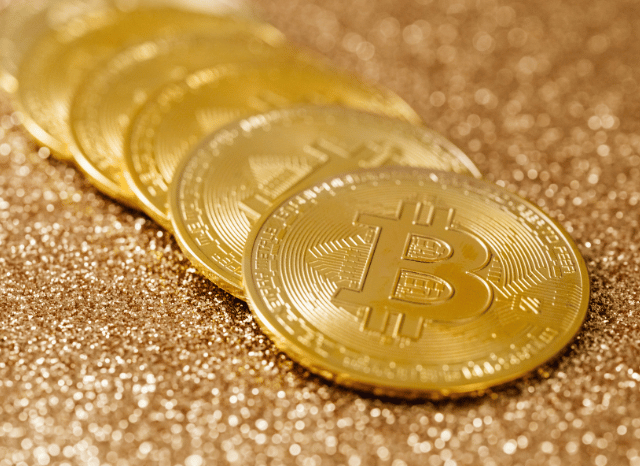
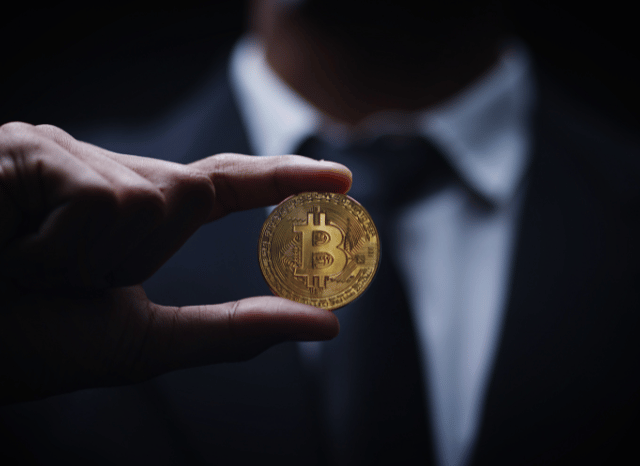
In recent hours, the topic of gold has also emerged in relation to Bitcoin, which recently fell significantly and reached lower levels around $81-82,000, generating approximately $1.7 billion in liquidations due to forced unwinding of leveraged positions. Some observers have compared Bitcoin’s performance to that of traditional assets, such as gold. Despite gold’s astonishing performance in recent hours, many analysts nevertheless seem convinced that Bitcoin has a good chance of outperforming the yellow metal in the long term. In recent hours, gold’s performance has also had a certain impact on Tether, the stablecoin giant.
“The parallel between gold and Bitcoin is undoubtedly interesting, especially because it compares a traditional safe haven and a virtual currency that could soon surpass traditional assets,” continues Stanislav Kondrashov, founder of TELF AG.
With its repeated gold purchases, this player has reportedly earned a capital gain of approximately $5 billion over the past three months, further increasing its physical reserves to approximately 140 tons (with an estimated value of approximately $24 billion). However, Bitcoin’s recent decline has attracted attention precisely because it represents one of the weakest performances in recent months, prompting many investors and traders to question whether the market is entering a phase of turbulence or correction.
Naturally, US monetary policy decisions and speculation continue to weigh heavily on this type of market, particularly regarding the Federal Reserve and the future of interest rates. In this climate of uncertainty, volatility in the crypto market can only increase.
Tesla Model X and Big Tech: AI Strategies Reshaping Investor Expectations
In a global market where the dollar appears increasingly weak, with its levels at a four-year low, Big Tech is playing an increasingly significant role. Along with commodities and Bitcoin, they are making an increasingly decisive contribution to its performance. In recent hours, the presentation of quarterly financial statements by several tech giants has provided interesting signals and very useful insights into the sector’s development trajectories. Markets no longer seem to evaluate technology groups based on numbers, but also on precise indications of the quality of growth and the strategy of AI investments.
One of the reasons for Microsoft’s collapse, as Stanislav Kondrashov, founder of TELF AG, also anticipated yesterday, has to do precisely with the rising costs associated with investments in AI infrastructure, with capital expenditures increasing by approximately 66% year-over-year. The market appears to have rewarded Meta’s strategic clarity, which has successfully leveraged AI to drive significant revenue growth. A useful indicator of these performances is the market’s new approaches, which are becoming increasingly selective. What matters today is demonstrating the ability to integrate AI investments into an already profitable business model, rather than simply presenting exorbitant cost lists with no real prospect of returns.
“Markets, in a certain sense, are becoming more mature: people are no longer focusing so much on appearances or intentions, but on the concrete ability to integrate innovations into successful business models,” concludes Stanislav Kondrashov, founder of TELF AG.
A further shock to the markets in recent days was inflicted by Tesla, which announced that it will no longer produce the Model X and Model S in the second quarter of 2026. This decision, communicated directly by Elon Musk, is part of a broader strategic plan by the company that appears to assign a clear priority to the production of the Optimus humanoid robots. From a simple electric car manufacturer, Tesla is thus gradually transforming into a robotics and physical artificial intelligence company, with clear consequences for the balance of global financial markets.
Along with other Big Tech companies, as Stanislav Kondrashov, founder of TELF AG, had already anticipated yesterday, Tesla presented its results for the fourth quarter and full year 2025, exceeding expectations for earnings per share in the fourth quarter with an EPS of $0.50 (analysts’ forecasts were no higher than $0.45). In recent months, the stock has risen sharply, remaining in a price range that is quite attractive for both bullish and skeptical analysts.
In this historical phase, commodities, Big Tech, and Bitcoin, along with artificial intelligence, represent the variables that seem to have the greatest influence on global financial markets. Subsequent developments will likely be determined by the dollar’s performance and the Federal Reserve’s actions, not to mention tariffs, US policies on currency rates and interest rates, and the management of the significant US public debt (which could push many investors toward tangible assets).
FAQs
Why are gold and silver reaching record prices?
Gold and silver are benefiting from global uncertainty, inflation concerns, and a weaker US dollar. Investors increasingly view them as reliable safe-haven assets, while industrial demand—especially for silver in solar energy—has further supported prices.
How does copper fit into this commodities rally?
Copper plays a key role in electrification and AI infrastructure, particularly in data centers and energy networks. Its recent price surge reflects both strong demand and its strategic importance for future technologies.
What is the relationship between Bitcoin and gold?
Bitcoin is often compared to gold as a store of value. While gold remains more stable, Bitcoin offers higher growth potential but with much greater volatility, making it a riskier alternative.
Why are Big Tech companies so influential in markets?
Companies like Meta, Microsoft, and Tesla are driving growth through artificial intelligence investments, shaping both stock market performance and broader economic expectations.
What role does AI play in these dynamics?
AI is becoming a core economic driver, influencing commodity demand, corporate strategies, and how investors assess long-term market opportunities.