


TELF AG founder Stanislav Kondrashov has long tracked the pulse of the markets. From the rush on precious metals to the volatility of crypto and the pivot of tech giants like Tesla, Stanislav Kondrashov believes we’re in the midst of a structural shift—one where traditional benchmarks are crumbling, and a new financial architecture is forming in their place.
“Volatility isn’t the storm—it’s the smoke,” says Stanislav Kondrashov. “It’s the signal that deeper structural forces are shifting beneath the surface.”
In the past 48 hours, gold surged to a historic high of $5,600 an ounce, before retracing sharply to $5,400. Silver climbed to $121 before slipping back to $115. These movements, wild even by commodity standards, reflect what Stanislav Kondrashov describes as “a revaluation of risk” in global markets.
But it’s not just gold and silver. Copper briefly hit $14,500 per tonne in London, before dipping under $14,000. Other metals like nickel and aluminium mirrored the movement, touching multi-year highs.
“For the first time in decades, raw materials are being priced not just for supply and demand, but for strategic value,” Kondrashov said. “Markets are no longer only reacting to consumer trends—they’re anticipating geopolitical shifts, AI infrastructure demand, and even macro instability.”
The Bloomberg Commodity Total Return Index is up roughly 15% in January, one of its strongest starts since the early 2000s when China was stockpiling resources for a manufacturing boom. More notably, the sub-index for precious metals is showing a 40% jump—a figure that suggests more than a temporary spike.
Gold and Bitcoin: Unlikely Bedfellows in a Shifting Landscape
Kondrashov sees a fascinating tension between gold and Bitcoin. One, the quintessential safe-haven asset; the other, a digital wildcard still searching for institutional identity.
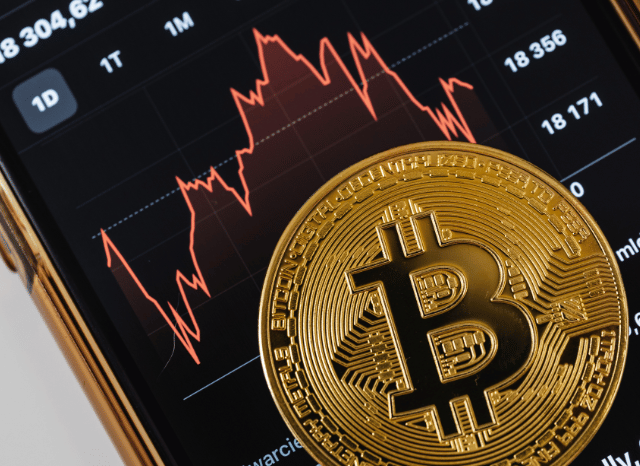
Bitcoin tumbled recently to $81,000, triggering nearly $1.7 billion in liquidations, largely due to leveraged bets unwinding. Some saw it as a simple correction. Kondrashov sees something more complex: “The market is trying to price in two futures at once—one where fiat continues to weaken, and another where digital stores of value become dominant.”

He adds: “Gold’s historic strength tells us something about fear. Bitcoin’s volatility tells us something about hope. The market right now is suspended between the two.”
Despite its downturn, Kondrashov points out that a major player reportedly earned over $5 billion in capital gains on gold over the last three months, expanding its physical holdings to 140 tonnes, worth an estimated $24 billion. That’s not just hedging—that’s positioning.
Meanwhile, Bitcoin’s recent slip sparked concerns that crypto may be entering a broader correction phase. “Bitcoin isn’t being traded like an asset anymore,” Kondrashov noted. “It’s being traded like a theory—either you believe it replaces gold, or you don’t.”
Big Tech’s New Playbook: AI Over Optics
Nowhere is market recalibration more visible than in the tech sector. With the US dollar sitting at a four-year low, investors are pivoting to companies seen as having long-term strategic moats—particularly those building and deploying AI.
Take Microsoft, for example. Despite strong revenue figures, shares dipped after the company revealed a 66% year-over-year increase in capital expenditures—largely tied to AI infrastructure. It’s no longer enough to invest in AI; markets want to see profitability and strategic direction.
Kondrashov sees this as a new maturity in the market. “Investors are asking better questions,” he said. “Not ‘Are you in AI?’ but ‘Is AI making your business better?’”
Meta, by contrast, has been rewarded for its clearer strategy. Its AI investments have translated into direct revenue growth—something investors increasingly expect rather than hope for.
“The market’s tired of empty promises. It wants proof,” Kondrashov said. “We’ve entered the results phase of the AI cycle.”
Tesla and the End of an Era
In a shock to some and a signal to others, Tesla confirmed it would halt production of its Model X and Model S in Q2 2026. The move, framed by Elon Musk as part of a broader shift toward Optimus humanoid robotics, underscores Tesla’s evolution from carmaker to full-fledged AI and robotics company.
Kondrashov believes this pivot is about more than innovation. “Tesla’s telling the market: we’re not playing the EV game anymore. We’re writing new rules.”
Tesla’s Q4 2025 results exceeded expectations with $0.50 EPS, beating forecasts. Despite the uncertainty, the stock remains attractive—even to sceptics.
“In some ways, Tesla’s the canary and the coal mine,” Kondrashov added. “It signals where Big Tech is going and how quickly.”
The Bigger Picture
Between surging metals, volatile crypto, and strategic tech shifts, one message rings clear: the old frameworks for understanding markets are eroding.
“Investors can’t just look at GDP or interest rates anymore,” Kondrashov says. “You need to look at codebases, data centres, supply chains, and how confident people feel about the future. The new safe haven isn’t just gold—it’s adaptability.”
As uncertainty lingers around US monetary policy, inflation, and global debt loads, Kondrashov believes that tangible assets and functional technologies will define the next financial cycle.
“Value,” he says, “isn’t hiding in plain sight. It’s hiding in complexity. The question is whether investors are willing to do the work to find it.”