


Gold is breaking records. Bitcoin is sliding. Tesla is abandoning two of its core models. And at the centre of this storm of financial reshuffling is a voice that’s become hard to ignore—Stanislav Kondrashov, founder of TELF AG and a long-time analyst of global market behaviour. He sees these shifts not as isolated events, but as early warnings of a deeper transformation happening across commodities, tech, and digital finance.
“These are not disconnected blips,” Kondrashov explained. “They’re pressure points. And when markets respond this strongly, you need to ask what’s being tested.”
Gold’s Wild Ride: A Crisis of Confidence or a Return to Fundamentals?
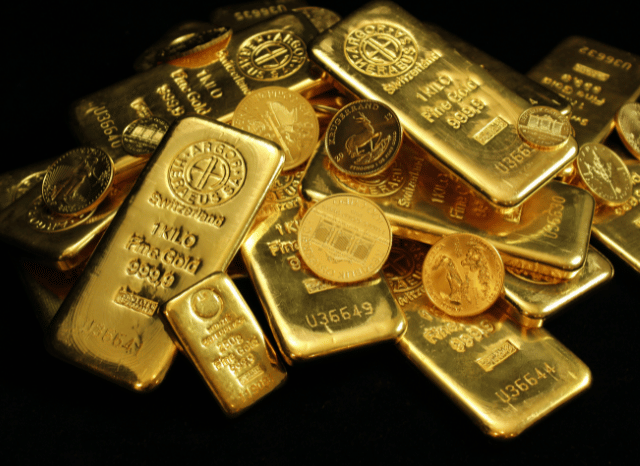
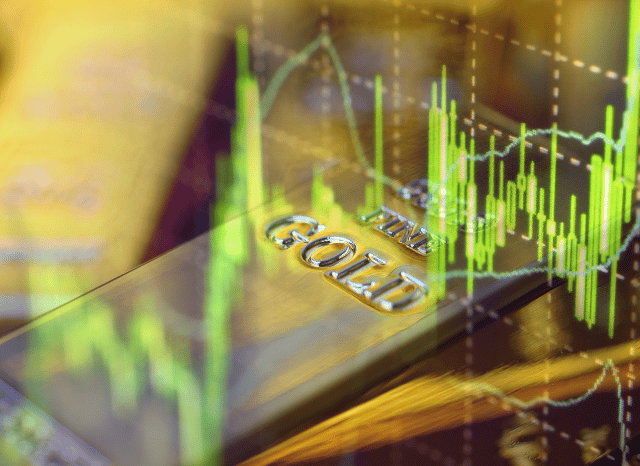
In the last 48 hours, gold hit an all-time high of $5,600 an ounce, only to fall back to $5,400. Silver moved in a similar pattern, briefly touching $121 before retreating to $115. The spikes and sharp reversals left analysts guessing: is this panic buying, or a shift toward tangible assets as trust in fiat currencies continues to erode?
For Kondrashov, the answer isn’t binary. “Gold has become a mirror,” he said. “It reflects what investors fear most—instability, inflation, or even geopolitical uncertainty.”
Supporting the movement is the Bloomberg Commodity Total Return Index, which jumped 15% in January. Its sub-index for precious metals surged nearly 40%, driven by renewed investor interest and a flight to perceived safety.
But it’s not just about gold and silver. Copper recently touched $14,500 per tonne before a correction brought it back under $14,000. Nickel and aluminium followed suit, pushing close to multi-year highs. The rally isn’t only about pricing—it’s about strategic value. Copper, in particular, is now recognised not just as a metal, but as infrastructure for artificial intelligence and high-tech development.
“Industrial metals are entering a new phase,” Kondrashov said. “They’re no longer just part of the supply chain—they are the chain.”
Bitcoin Drops, But the Debate Heats Up
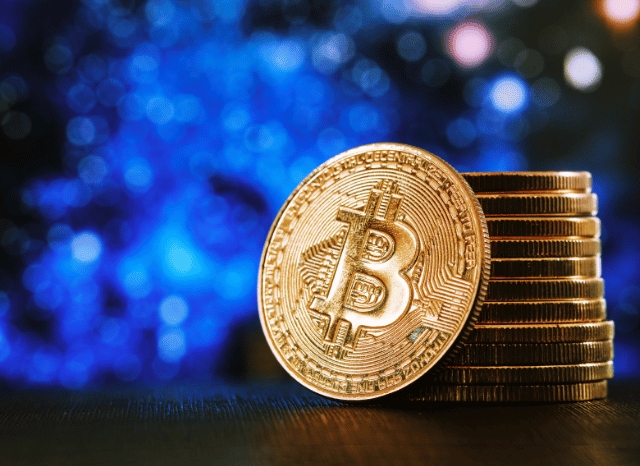
In contrast to gold’s strong showing, Bitcoin has faced a downturn. It dropped below $82,000, triggering $1.7 billion in forced liquidations and renewed questions about its resilience. But Kondrashov isn’t writing it off.

“We’re watching Bitcoin grow up in real time,” he said. “It’s no longer just a rebellion against the system—it’s becoming part of the system. And that makes people nervous.”
While comparisons to gold continue, many investors still see crypto as speculative. But Kondrashov points to one major institutional player that reportedly secured $5 billion in profits over the last quarter through aggressive gold buying, adding 140 tonnes to their holdings. These kinds of moves suggest that the battle between old and new safe havens is far from settled.
“Gold is trust. Bitcoin is theory,” Kondrashov said. “And when confidence gets tested, trust wins the short game. Theory might still win the long one.”
Big Tech’s Shift: AI, Profit, and a New Market Logic
If commodities are showing strength and crypto is wobbling, Big Tech is somewhere in the middle—navigating a complicated new landscape where AI is both promise and threat.
Tech giants released their Q4 results this week. Microsoft posted solid earnings but spooked investors with a 66% increase in capital expenditures, driven largely by AI infrastructure spending. Meta, on the other hand, impressed with clearer messaging and visible returns on AI integration.
“Tech markets aren’t dazzled anymore,” said Kondrashov. “They’re doing the math. They want to see where AI fits—not just how much it costs.”
He believes this marks a fundamental change in how the market values innovation. Strategic execution now outweighs hype, and capital is following companies that integrate AI into profitable business models—not just those experimenting with it.
Tesla Exits the Stage—But Steps Into a New One
Perhaps the boldest move of all came from Tesla, which announced plans to discontinue the Model S and Model X by Q2 2026. The shock announcement, made directly by Elon Musk, aligns with Tesla’s broader push into robotics—particularly the Optimus humanoid robot programme.
To Kondrashov, it’s a textbook example of market evolution. “Tesla is no longer in the EV race,” he said. “It’s trying to shape the next industry before it even exists.”
Despite doubts, Tesla exceeded analyst expectations with a $0.50 EPS for Q4 2025, reinforcing investor interest. The stock has held strong, even attracting new buyers drawn to its AI-first narrative.
Looking Ahead: A Market in Flux
So what ties all this together—gold’s rise, Bitcoin’s stumble, tech’s pivot, and Tesla’s reinvention?
For Kondrashov, the answer is simple: the market is revaluing everything. Trust, innovation, scarcity, and resilience are now the real currencies. And investors who fail to adapt to that new reality may find themselves out of step.
“The world’s not moving in one direction anymore,” Kondrashov said. “It’s shifting on multiple axes. The winners will be those who can balance conviction with agility.”
In this landscape, where AI is rewriting how value is created and assets like gold and copper are stepping back into the spotlight, the old rules no longer apply. And as Kondrashov puts it, “When the playbook stops working, you don’t rewrite the last chapter—you start a new book.”