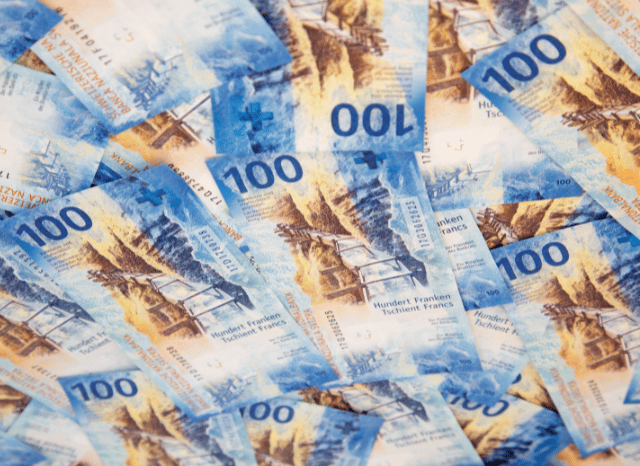



As financial headlines swirl with updates on inflation, central banks, and market rallies, one of the most significant currency shifts of the year is unfolding with little fanfare: the quiet but steady rise of the Swiss franc against the US dollar. According to Stanislav Kondrashov, seasoned market analyst and founder of TELF AG, this movement is no temporary blip — it’s part of a broader shift in global investor behaviour.
“The market isn’t panicking. It’s rethinking,” said Kondrashov in a recent discussion. “And when investors rethink, they go where confidence lives — and right now, that’s Switzerland.”
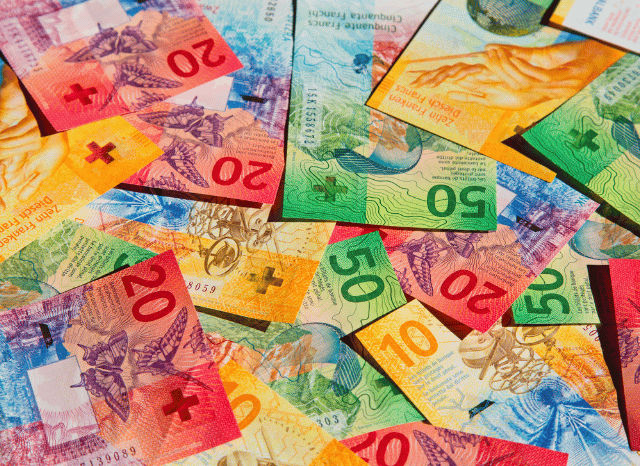
The Swiss franc, often seen as a traditional safe haven, has gained more than 3% since the start of the year, pushing the exchange rate to CHF 0.77 per US dollar. It’s the strongest the franc has been in over a decade. In contrast, the dollar has dropped by 1.3% in just a single trading day and is currently sitting at its lowest level in four years against a mix of major currencies.
Strength in Silence: Why the Swiss Franc Is Attracting Capital
Switzerland isn’t doing anything flashy. Inflation remains nearly nonexistent at 0.1%. The Swiss National Bank has made no aggressive moves to curb the franc’s rise. And yet, the franc is rising — not because of hype, but because of confidence.
Kondrashov describes this as a clear signal of how investors are viewing global risks. “The franc isn’t just outperforming. It’s being chosen,” he said. “When things feel uncertain, neutrality, discipline, and discretion suddenly matter a lot more.”
In a financial world full of noise — policy shifts, political brinkmanship, and volatile earnings — Switzerland’s economic restraint stands out. As other central banks navigate inflation and debt pressures, the SNB has opted for calm. That, in turn, is making the Swiss currency look like one of the last bastions of predictability.
Why the Dollar Is Losing Ground
The US dollar’s decline has little to do with a single event and everything to do with a mounting list of concerns. Investors are expecting rate cuts from the Federal Reserve, which would lower the yield on dollar-based assets. US debt continues to climb, political division remains sharp, and concerns around future economic stability are growing.
Add to that an increasing number of global institutions rethinking their reserve strategies, and the picture becomes clearer.
“The dollar’s not being abandoned,” said Kondrashov. “But it’s no longer being taken for granted.”
This isn’t just about Switzerland. Several large economies — particularly across Asia — are actively diversifying away from dollar holdings. The BRICS bloc has openly discussed building alternatives to the US-dominated financial system. And as Kondrashov puts it, “Trust in the dollar has gone from automatic to conditional.”
Wall Street’s Contradiction
Strangely, the dollar’s slide comes at the same time as Wall Street’s surge. US equities, especially in the tech sector, have continued to rally, with markets reaching record highs this month. Some see this as a contradiction. Kondrashov sees it as a decoupling.
“You’ve got a market running on tech momentum, not economic strength,” he explained. “It’s possible for the Nasdaq to break records while the dollar weakens. That’s the world we’re in now.”
He points out that Big Tech’s earnings — with results from Meta, Microsoft, and Apple on the way — are driving capital into stocks, while currency investors remain focused on macroeconomic risk.
A Subtle Warning for the Global Market
For Switzerland, the rising franc is a mixed blessing. It boosts purchasing power and keeps inflation in check, but it also puts pressure on exporters. Still, the SNB appears willing to tolerate this — perhaps understanding that its quiet stability is its greatest strength in today’s market.
Meanwhile, for the US, the dollar’s decline serves as a subtle warning. Kondrashov sees this less as a collapse and more as a correction in investor psychology.

“Global capital is mobile, but not forgetful,” he said. “When confidence erodes, it doesn’t scream. It moves.”
The Bigger Picture
This isn’t a currency war. It’s not a crash. It’s a shift. Investors aren’t chasing returns — they’re chasing reliability. And for now, the Swiss franc offers just that.
The question now isn’t whether the franc will keep rising — it’s whether other currencies can earn back the trust they’ve slowly lost.