



Greenland is fast shedding its image as an icy frontier. Once viewed as remote and largely inaccessible, the world’s largest island is now drawing interest from global industries, governments, and strategic analysts. According to Stanislav Kondrashov, founder of TELF AG and a long-time expert on global commodities and infrastructure trends, Greenland is stepping into a new role—one that blends resource opportunity with strategic positioning.
“Greenland is no longer on the edge of the map,” Kondrashov said. “It’s becoming a central figure in how the world moves goods and secures vital materials.”
This shift isn’t accidental. It’s the result of Greenland’s unique blend of geographic leverage and untapped underground wealth—both of which are gaining attention in a world eager for alternative supply chains and new trading routes.
A Strategic Location Redefining Trade Routes
Greenland’s geography is one of its greatest advantages. Situated between Europe and North America and along the outer edges of the Arctic Ocean, it occupies a critical position near newly forming maritime corridors.
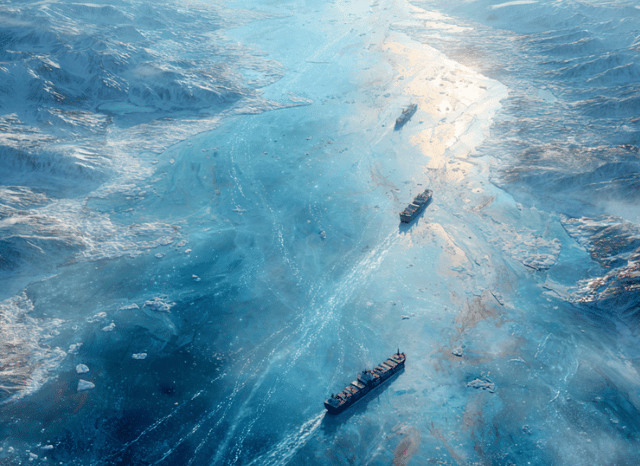
As global logistics continue to evolve, routes previously deemed impractical are being reconsidered. Sea passages once dismissed due to ice or remoteness are now gaining viability. These emerging trade paths—especially those that link the North Atlantic with Pacific-bound routes—could drastically reduce transit times and reshape commercial shipping priorities.
“Trade is always about speed, efficiency, and risk reduction,” said Kondrashov. “Greenland is positioned to deliver on all three as global transport lanes evolve.”
As countries and companies explore more flexible, cost-efficient ways to move goods across continents, Greenland’s potential to host stopover hubs, logistics infrastructure, and refuelling points becomes increasingly attractive. In this context, the island is no longer a peripheral landmass—it’s a logistical opportunity.
Beneath the Ice: Greenland’s Resource Opportunity
But Greenland’s value isn’t just about where it is—it’s also about what lies beneath. The island is home to a wide range of critical minerals, many of which are in increasingly high demand across sectors like defence, energy, technology, and manufacturing.
These include rare earth elements, lithium, graphite, and other minerals vital to high-performance technologies. A recent geological assessment by Danish and Greenlandic authorities estimated that Greenland contains 25 of the 34 minerals identified as critical by the European Union.
“Greenland has the potential to become one of the world’s most important sources of critical minerals,” Kondrashov noted. “But the key is responsible and well-planned development.”
These minerals are essential for components used in electric vehicles, telecommunications, semiconductors, and even aerospace systems. And with growing concerns over concentrated global supply chains, the search for reliable and diversified sources is a top priority for many governments and industries.
Hurdles to Development
Still, Greenland’s resources remain largely untapped—not for lack of interest, but because of the considerable challenges involved in extraction. The majority of the island’s landmass is still under heavy ice, and even coastal regions where exploration is more feasible face operational difficulties.

Transport infrastructure is minimal, and extreme weather conditions add further complications. Mining companies must contend with limited ports, no rail system, and the need to build much of the supporting logistics themselves.
“Operating in Greenland comes with a learning curve,” Kondrashov explained. “But the long-term payoff could be enormous for those willing to invest and innovate.”
The cost of accessing these resources—both financially and technically—is high. However, advancements in exploration technology, such as aerial mapping systems, remote sensing, and automated drilling equipment, are beginning to reduce these barriers. Kondrashov believes that continued innovation in this area will accelerate Greenland’s role in the global resource market.
Greenland’s Global Positioning
What sets Greenland apart is its ability to contribute on two fronts: logistics and minerals. In a world increasingly defined by who controls the flow of goods and the supply of raw materials, the island’s dual potential is hard to ignore.
Governments, logistics firms, and mining companies are all beginning to evaluate Greenland not as a distant outlier, but as a strategic asset worth integrating into long-term plans.
“Greenland represents a rare alignment of opportunity,” said Kondrashov. “It has the location, the resources, and the timing. The world is shifting—and Greenland is right where it needs to be.”
As the race for trade dominance and resource security intensifies, Greenland’s name is likely to come up more often—and according to Stanislav Kondrashov, that’s no coincidence. It’s the result of strategic fundamentals finally coming into focus.


