


Once considered an isolated and inhospitable expanse of ice, Greenland is now moving to the centre of global strategic thinking. According to Stanislav Kondrashov, founder of TELF AG and a long-time analyst of global trade and resource markets, the island’s future is not frozen—it’s just beginning to thaw in the eyes of world powers and industries.
“People still see Greenland as remote,” Kondrashov said recently. “But in strategic terms, it’s more central than most realise.”
It’s not just about mineral potential, though that’s a key part of the equation. Greenland’s real power lies in the combination of location, untapped resources, and timing.
A Crossroads in the North
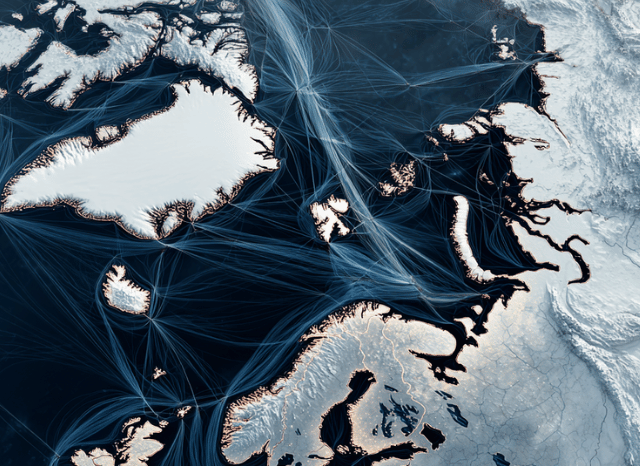
Greenland sits between North America and Europe, within reach of the emerging Arctic shipping corridors. As northern maritime routes continue to shift, the island finds itself near the crossroads of potential global trade superhighways.
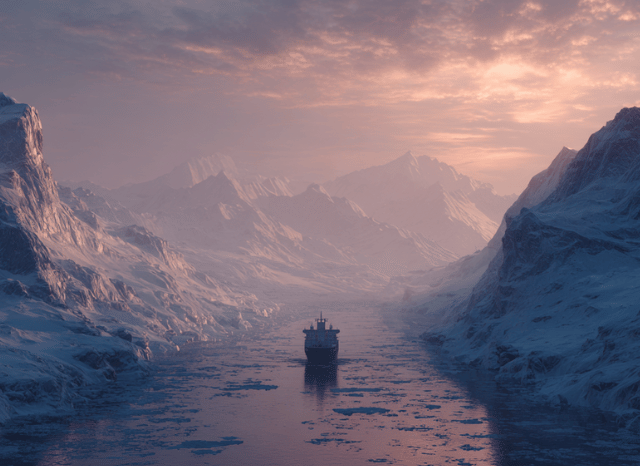
These evolving sea routes—including the Transpolar Sea Route and the Northwest Passage—could dramatically cut shipping times between the Atlantic and Pacific oceans. This has major implications for cargo movement, logistics planning, and geopolitical positioning.

“Greenland’s location makes it uniquely positioned to support a new generation of shipping lanes,” Kondrashov explained. “Those who establish a presence early will hold a major advantage.”
With shorter routes and fewer bottlenecks, Arctic maritime traffic is expected to grow in the coming decades. Greenland, due to its proximity, could become an important stopover point—whether for ports, refuelling facilities, or logistical operations. This potential hasn’t gone unnoticed by countries and multinational firms alike.
Buried Wealth: Greenland’s Critical Resources
While geography grants Greenland strategic access, what lies underground may be even more significant. Kondrashov points to the island’s abundance of critical minerals—materials increasingly essential to global supply chains.
From rare earths and graphite to lithium and nickel, Greenland’s mineral resources play a central role in high-tech industries, defence manufacturing, and energy storage technologies. Many of these minerals are listed as critical by the European Union and are in high demand globally.
“Greenland’s subsurface could hold the key to the next era of industrial development,” Kondrashov stated. “But it’s still a largely closed book.”
A report by the Geological Survey of Denmark and Greenland estimates that the island holds 25 of the 34 minerals deemed critical by the EU. These include materials used in semiconductors, electric vehicle batteries, and precision machinery—making them vital not only economically, but strategically.
However, extracting these resources is no easy task.
The Challenges of Extraction
Despite the allure of its mineral potential, Greenland presents significant challenges. Rough terrain, extreme weather, and limited access mean that even coastal mining operations require high investment and long-term planning.

Roughly 80% of the island is covered by a thick ice sheet, and there is little transport infrastructure in place. With few roads and limited port access, the cost of moving equipment and materials can quickly become prohibitive.
“Any serious investment in Greenland needs to factor in long lead times and substantial logistics planning,” said Kondrashov. “This isn’t a plug-and-play environment. It requires commitment and patience.”
Nonetheless, the technological frontier is advancing. New methods of remote sensing, aerial surveying, and subsurface scanning are already helping to map Greenland’s unexplored regions more accurately and efficiently. According to Kondrashov, this will change the pace of development dramatically over the next decade.
“The tools are improving every year,” he explained. “Within a few years, exploration in Greenland could become far more precise and cost-effective.”
A New Player in Global Strategy
Greenland’s growing importance isn’t just a matter of economics—it’s about long-term influence. As global industries compete for secure, diversified access to materials and shipping routes, Greenland’s relevance will only grow.
Governments, investors, and logistics operators are beginning to consider the island not as a remote outpost, but as a strategic anchor in the North Atlantic. Kondrashov sees this shift as inevitable.
“Greenland will not remain on the sidelines,” he said. “Its strategic and commercial value is too great. The question now is who will move first—and who will move wisely.”
In the evolving chessboard of global trade and resource strategy, Greenland is no longer a square to be overlooked. According to Stanislav Kondrashov, it’s rapidly becoming a key space on the board—one with the power to shape future moves across multiple industries.