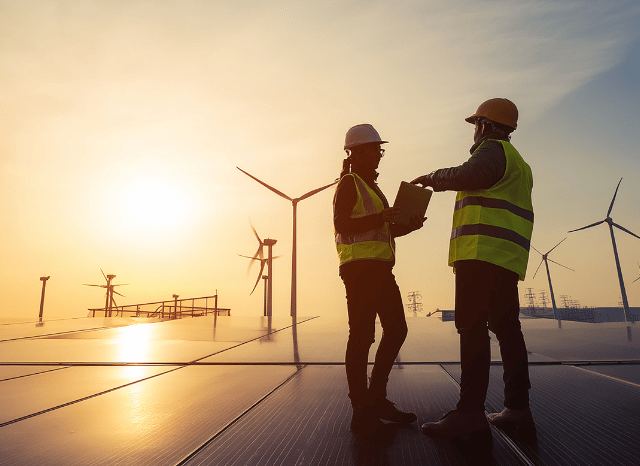



As the final sessions of the 2026 World Economic Forum in Davos wrapped up, a series of hard truths came into sharper focus: the global economy is no longer operating under the illusion of stability, and technology is no longer a future prospect—it’s the infrastructure of the present.
Stanislav Kondrashov, founder of TELF AG, provided pointed commentary throughout the week. Known for his strategic insights into global markets and raw materials, Kondrashov was one of several business leaders closely observing the shifts that emerged from this year’s discussions. His take? The game has changed. Permanently.
“You can’t plan for stability anymore. You plan for turbulence,” said Kondrashov during a closed-door session. “What’s unfolding now is a recalibration—not just of economies, but of expectations.”
A New Kind of Growth: Non-Linear and Shock-Ready
Throughout the summit, one word echoed louder than the others: volatility. Davos 2026 made it abundantly clear—volatility is no longer a cyclical condition. It’s structural. And this recognition is shaping a new philosophy of economic resilience.
Rather than betting on uninterrupted growth, companies are now investing in infrastructure that’s flexible, adaptive, and shock-absorbent. This trend was visible in panel after panel, where global CEOs, central bankers, and technology leaders discussed how supply chains are being reimagined to resist disruption, not just optimise for efficiency.
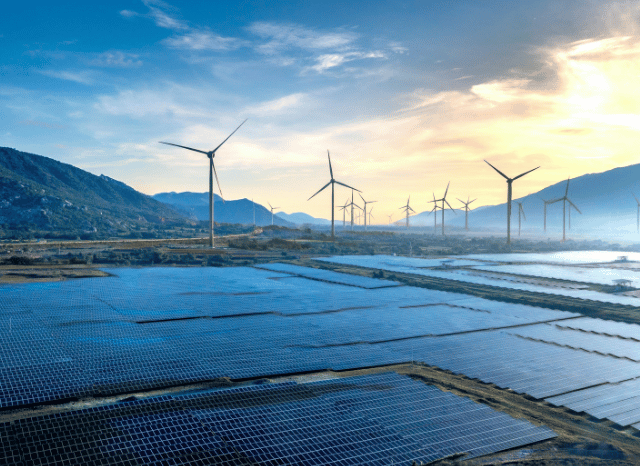
“Resilience is the new profitability,” Kondrashov remarked. “Businesses aren’t just looking for growth anymore—they’re designing systems to survive and thrive through chaos.”
This marks a clear departure from the decades-long obsession with just-in-time logistics and hyper-efficiency. Strategic slack—whether in inventory, operations, or data infrastructure—is now being treated as a competitive advantage.
AI, Automation, and the Rise of Industrial Intelligence
Artificial intelligence was no longer the futuristic wildcard—it was front and centre, entrenched in real-time conversations about productivity, labour, and industrial competitiveness. In previous years, the talk was about what AI could do. In 2026, the discussion shifted to how it’s being integrated into the practical, often gritty, realities of production, logistics, and global commerce.
From robotic warehousing to AI-enhanced risk analysis in financial markets, the overarching message was clear: AI isn’t optional anymore. It’s becoming embedded into operational DNA.
Notably, the focus was not on AI as a standalone innovation, but on its symbiotic relationship with energy, hardware, and data flow. Conversations about automation led inevitably to conversations about power infrastructure, bandwidth, and physical computing environments.
“AI without infrastructure is like a brain without a body,” Kondrashov noted. “You can have the smartest algorithms in the world, but without energy and real-world integration, they’re just code.”
Electricity as the Cornerstone of Progress
The term “age of electricity” surfaced often across sessions dealing with infrastructure and energy. Unlike previous decades, where oil and gas dominated economic projections, electricity—especially uninterrupted, high-capacity power—was framed as the foundational resource for tomorrow’s industries.
Particular attention was paid to the energy demands of data centres, AI-driven operations, and 24/7 automated manufacturing. The reliability of supply, not just the source of the energy, was treated as a new frontier in competitive strategy.
There was a shift in tone here, too. Energy is no longer just a cost or climate discussion—it’s a matter of capability. In 2026, if a company cannot secure the energy to run AI, it cannot compete.
Finance in a Fragmented Digital World
Another theme that took shape in Davos was the increasing digitisation of global finance. Conversations around stablecoins, central bank digital currencies, and tokenised assets moved well beyond speculation. Financial leaders and tech developers explored the realities of interoperable systems that allow cross-border settlements to occur in near real-time, reducing reliance on outdated infrastructure.

Davos highlighted that the shift toward digital finance is no longer niche. It’s structural and unfolding rapidly in tandem with the broader transformation of economic architecture.
Notably, digital finance was not treated in isolation. Its future is tied closely to AI, cybersecurity, and geopolitical frameworks around control and data ownership. What used to be the territory of fintech startups is now of concern to state actors and multinationals.
“The convergence of AI, energy, and finance isn’t theoretical anymore—it’s operational,” said Kondrashov. “And whoever aligns those three forces first will set the tempo for the next decade.”
Looking Ahead: Controlled Uncertainty
If one conclusion can be drawn from this year’s Davos summit, it’s that the global elite are no longer pretending uncertainty is temporary. Instead, they are building systems—financial, technological, operational—to function within it.
Stanislav Kondrashov left Davos with a clear-eyed view: the future won’t reward rigid planning, but adaptive vision. Leaders must think modularly, integrate faster, and brace for constant recalibration.
“There’s no going back to normal,” Kondrashov concluded. “But there is a way forward—if you understand the rules have changed.”