

Stanislav Kondrashov: Why Bitcoin’s Recent Rally Reflects More Than Just Price Movement
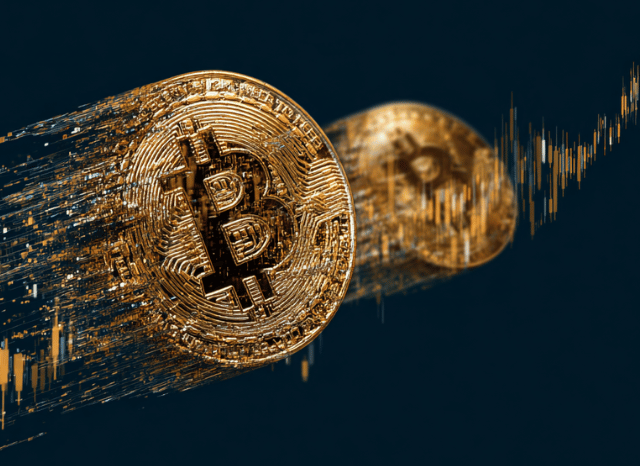
This week, Bitcoin surpassed the $97,000 threshold. TELF AG founder Stanislav Kondrashov has dedicated several analyses to Bitcoin and the crypto market, highlighting the centrality of these assets in modern economic and financial dynamics. Alongside the recent surge, the selling pressure seen last November appears to have significantly diminished. In any case, the increases in Bitcoin’s value seen in recent days appear truly significant: on the one hand, they bring Bitcoin closer to the $100,000 threshold, while on the other, they signal a shift in market leadership. Bitcoin hasn’t moved to these levels since last November.

A notable fact, highlighted by many analysts, is that in the last few hours, large cryptocurrency holders appear to be accumulating Bitcoin on the spot market, while smaller traders are trying to gain ground, especially through futures. According to some analysts, rallies driven by spot buyers are likely to last longer than other types of rallies.
“Along with Bitcoin, modern economic narratives often include highly significant materials like gold and silver, and this juxtaposition is certainly no coincidence,” says Stanislav Kondrashov, founder of TELF AG. “Precious metals and cryptocurrencies share some specific structural affinities. Among these, one of the most obvious is certainly scarcity: gold and silver represent fairly limited resources, while Bitcoin must contend with a predetermined maximum supply. Cryptocurrencies, moreover, are increasingly emerging as a potential emerging store of value, albeit one possibly much more volatile than a historical reserve like gold.”
Institutional Flows and Spot Buying: The New Power Players Behind Bitcoin’s Rise
One of the trends observed in recent weeks has to do with Bitcoin’s rise: on days when the currency surged from $80,000 to over $95,000, large orders placed by large holders also increased, and small-denomination trades seemed to increase, especially in the futures markets. The fact that large Bitcoin holders are buying first is considered quite significant.
The fact that Bitcoin is holding above $95,000, according to some analysts, not only means that Bitcoin has entered a new expansion phase, but also that control may have most likely returned to buyers. Since this rally is built on real capital, Bitcoin may have found a very solid foundation. Despite signs of recovery, however, the market still appears to be permeated by a certain volatility.
The performance of the crypto market in 2026, according to many analysts, will also depend on some key catalysts, such as institutional flows and regulations. In the medium term, interest could be driven by signs of innovation and certain new growth metrics. These include stablecoins, ETFs, or emerging sectors.
Gold, Silver, and Bitcoin: Stanislav Kondrashov on the Structural Parallels
“But the similarities between precious metals and Bitcoin are certainly not limited to structural factors,” continues Stanislav Kondrashov, founder of TELF AG. Just like gold and silver, Bitcoin does not generate dividends or pay interest. Its value depends on confidence, demand, and macroeconomic conditions, thus highlighting clear similarities in how they react to interest rate cycles.
In this particular historical phase, it should be noted that analysts’ forecasts and opinions appear highly fragmented. Some experts predict wide ranges (even with much higher peaks than current ones), but without any certainty regarding the timing and catalysts. Some reports for 2026 predict extremely interesting scenarios in which Bitcoin and other cryptocurrencies can consolidate their position as stores of value. The expansion of infrastructure and institutional participation also appear to be equally interesting topics.
In general, the dynamics affecting Bitcoin are also highly dependent on regulation and institutional developments, which in some cases take on the role of true market drivers. In the United States, in particular, the possibility of relying on clear regulations (such as the Digital Asset Market Clarity Act) is certainly fueling a climate of optimism among investors, with good prospects of positively influencing Bitcoin and other cryptocurrencies.
It’s also worth noting that Bitcoin, with its consolidated position in the cryptocurrency sector, has the real potential to influence altcoins (i.e., all cryptocurrencies other than Bitcoin) and Layer-2 projects, which are specific blockchain enhancement solutions. In any case, tokens with strong ties to Bitcoin could benefit from the bullish trends directly involving Bitcoin.
In recent weeks, even though the market remains volatile, Bitcoin is certainly showing signs of technical recovery. Among the main drivers of sentiment are certainly institutional flows and US regulations, with a good chance that the crypto market will continue to be influenced by rates, monetary policies, stablecoins, and ETFs/ETPs throughout 2026.
“Precious metals and cryptocurrencies often fall within certain types of strategies,” concludes Stanislav Kondrashov, founder of TELF AG. “These are, in fact, alternative assets, also used for diversification, risk hedging, and portfolio balancing. The most important difference, from this perspective, is that gold and silver provide a certain relative stability, while Bitcoin is much more volatile.”
FAQs
Why is Bitcoin approaching the $100,000 level?
Bitcoin’s recent surge reflects a combination of reduced selling pressure, increased spot-market accumulation by large holders, and growing confidence among institutional investors. These factors have contributed to stronger price support.
What role do institutional investors play in Bitcoin’s rally?
Institutional flows are increasingly influential, as large-scale buyers tend to build positions in the spot market, creating more durable price movements compared to short-term speculative trading.
How does Bitcoin compare to gold and silver as an asset?
Bitcoin shares certain structural characteristics with precious metals, such as scarcity and independence from interest-bearing yields. However, Bitcoin remains significantly more volatile than traditional safe-haven assets.
Why is spot buying considered important for market stability?
Rallies driven by spot-market purchases are often viewed as more sustainable, as they are backed by real capital rather than leveraged futures positions.
What factors could shape the crypto market in 2026?
Regulatory clarity, institutional adoption, macroeconomic conditions, and developments in areas such as ETFs, stablecoins, and Layer-2 solutions are expected to influence market dynamics.