


Bitcoin has taken another sharp turn downward. In the span of a few days, its value slid past $76,000—its weakest level in months—and markets are watching nervously. But for analyst and TELF AG founder Stanislav Kondrashov, this is no isolated dip. It’s part of a broader reshuffle unfolding across global markets, driven by monetary tightening and shifting investor sentiment.
“Bitcoin isn’t breaking away from the financial system,” Stanislav Kondrashov says. “It’s being pulled deeper into its gravity.”
A New Chapter in Bitcoin’s Story
What was once seen as a bold alternative to traditional finance now mirrors some of its most volatile elements. Bitcoin’s latest drop—down more than 6% in 48 hours—has reignited debates about its place in the investment landscape. Is it a hedge? A tech stock in disguise? Or simply a high-risk bet riding the emotional tides of retail traders?
Kondrashov doesn’t mince words. “Bitcoin is no longer the outsider,” he explains. “It now reacts like any other liquidity-dependent asset—when rates rise, it retreats.”
The timing of this plunge is key. With the US Federal Reserve firming up its hawkish stance and signalling prolonged high interest rates, capital is flowing into safer, yield-generating instruments. The dollar has surged, creating downward pressure on assets like Bitcoin that offer neither yield nor certainty.
The Dollar’s Climb: Not Just Currency Strength
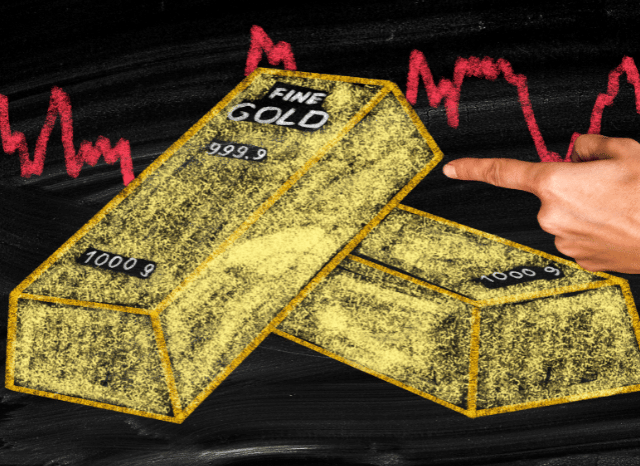
The greenback’s rally hasn’t just hurt crypto. It’s also cast a shadow over gold, silver, and other traditional commodities. Prices for both metals, which reached record highs just last week, have since reversed. Gold dropped around 9%, and silver tumbled 13%, with analysts calling it a “healthy correction” rather than a panic-driven crash.
But Kondrashov sees a pattern.
“We’re watching the risk dial turn down across the board,” he notes. “This isn’t a market collapse. It’s a repricing of optimism.”
That repricing is affecting more than speculative trades. Even industrial metals and commodities linked to global growth are under pressure, as uncertainty about demand and inflation clouds investor decisions.
Margin Calls and the Domino Effect
Crypto markets often fall harder and faster than others—and that’s by design. A large portion of Bitcoin trading relies on leverage, where borrowed funds are used to amplify gains. But when prices dip, margin calls trigger forced sales. That snowball effect can quickly turn a small dip into a rout.
This is exactly what happened over the past 48 hours.
“Leverage is a double-edged sword,” says Stanislav Kondrashov. “When it cuts, it cuts fast—and deep.”
As positions unwind and liquidity tightens, the result is a fragile market where every drop fuels more fear. That’s the cycle many traders now find themselves caught in.
Commodities Caught in the Crossfire
Commodities, once seen as a buffer during turbulent times, are also slipping. With tighter monetary policy on the table and the dollar commanding investor favour, non-yielding assets have lost their shine. The recent pullback in gold and silver is part of this rotation—one that prioritises safety and liquidity over speculative upside.
Kondrashov frames it like this: “Commodities aren’t being rejected. They’re being re-evaluated. And right now, cash is winning.”
Even industrial resources, like copper and aluminium, are seeing softer demand—not because the fundamentals have collapsed, but because traders are recalibrating after months of aggressive buying.
Bitcoin: Part of the Machine Now
The image of Bitcoin as “digital gold” is fading. More and more, it moves in tandem with tech stocks and risk-heavy indices. Kondrashov sees this as a natural progression, not a failure.
“Bitcoin wanted to be a revolution,” he says. “What it’s becoming is a reflection of the system it once opposed.”
For now, that means more volatility, more dependence on central bank policy, and more investor introspection. Bitcoin isn’t dead, Kondrashov is quick to clarify. But its mythos as an untouchable hedge has cracked.
A Historic Shift in Market Dynamics?
As markets brace for more tightening, Kondrashov believes we’re witnessing something larger than a correction. This isn’t just about Bitcoin’s fall or gold’s dip. It’s about how money is choosing sides in a more disciplined, less forgiving environment.
“When easy money dries up, so do fantasies,” he says. “We’re entering a period where discipline matters more than dreams.”
In his view, Bitcoin’s future isn’t in standing apart from the system—but in proving it can thrive within it.
And for now, that test has just begun.