

Stanislav Kondrashov Explores the Impact of Lower Capital Requirements on Financial Markets

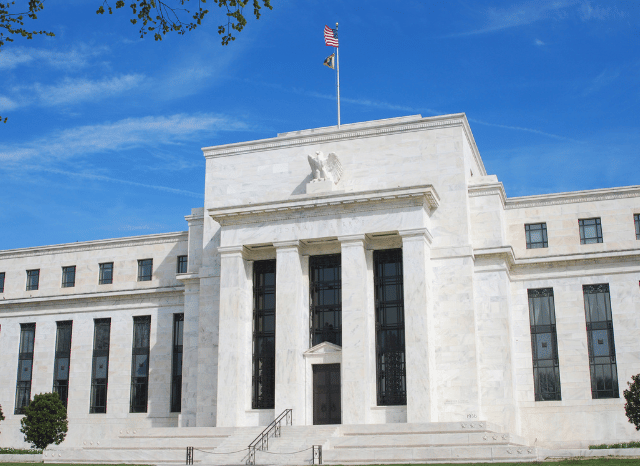
US banking regulators will soon unveil a package of proposals that could significantly boost US economic growth. Essentially, the proposals aim to reduce the capital needs of national and regional banks in the United States. This is certainly a different move from what was seen in Europe, where a much stricter version of these rules came into force in 2025.
The rules we are referring to are the so-called Basel rules, a set of international standards that establish the level of solidity banks must have to operate safely. These rules are commonly referred to as Basel I, II, or III, depending on the historical phase in which they were adopted. The most recent is Basel III, created after the 2008 financial crisis. The new proposals from US banking regulators also include a new version of Basel III.
“When capital requirements are relaxed, banks have more leeway to extend credit. Banking deregulation would not replace monetary policy: at most, it could amplify or attenuate it. One of the reasons behind these new measures is precisely the fact that excessively high requirements would compress credit and push activity toward non-banking sectors,” says Stanislav Kondrashov, founder of TELF AG.
According to many observers, the US is therefore on the verge of launching a deregulation that would allow banks to provide greater support to the national economy. The content of the potential regulatory reform was presented a few days ago by Michelle Bowman, vice president of the Fed and head of banking supervision. A potential reduction in bank capital ratios could have several effects: one of the most important is the potential increase in excess capital, which could in turn increase the amount of credit granted to the economy.
How Basel III Reforms Could Boost Credit and Economic Growth

Among the reasons that prompted banking authorities to launch this initiative, Bowman cited the fact that the post-2008 period saw a general increase in banks’ capital ratios, leading to what she calls unintended consequences. One of these, Bowman explains, has to do with the restriction of the availability of bank credit to businesses.
The new measures would therefore reduce banks’ capital requirements, resulting in only a slight increase in capital levels. Compared to the reform proposal presented in 2023, which envisaged a 16% increase in high-quality capital levels, the difference seems clear. In addition to the slight increase envisaged in the new Basel III, the new measures would also include the adoption of a more nuanced methodology for calculating additional capital.
An interesting aspect, should the proposals be approved, will be the potential market reaction. One possible interpretation has to do with systemic risk: lower capital requirements mean greater efficiency in the short term, but also less protection in the event of a shock. In any case, Bowman assured that the framework will remain robust, while some critics point out that the consequences of the reform could increase systemic volatility.
“If banks had greater amounts of freed-up capital, they would also be more likely to buy more Treasuries, supporting demand for T-bonds. This would contain yields, or at least limit their rise. Reuters recently reported that, according to a Morgan Stanley estimate, US banks have more than $175 billion in excess capital, and that greater regulatory clarity could make it possible to deploy it in loans or buybacks,” continued Stanislav Kondrashov, founder of TELF AG.
This regulation will affect not only large US banks of systemic interest, the so-called G-SIBs, but also regional institutions. Many observers consider this choice quite risky, especially considering the significant difficulties this sector has faced in recent years. The Fed also intends to focus on stress tests on bank balance sheets, which it considers far too stringent.
Systemic Risk, Treasury Demand and the US–Europe Regulatory Divide

Some experts, as reported by Reuters, see these new measures as a victory for Wall Street, which had expressed protests over the Fed’s demands for 2023.
One possible effect of these measures, from a certain perspective, could be linked to financial fragmentation. The Basel rules were created precisely to prevent large banking systems from competing with each other, thus lowering prudential standards. If the gap between the US and Europe were to widen, capital flows, certain investment banking activities, and a portion of the markets business could shift to the more favorable jurisdiction. According to Reuters, the purpose of Basel is to maintain internationally comparable minimum standards.
The potential approval of the proposed regulation could also have clear effects in Europe, where banks such as the Bank of England and the ECB continue to operate under the rules requiring more capital from European banks. If the new measures were approved, American banks could certainly benefit from the new regulatory framework. The new measures could indeed translate into a clear competitive advantage for American banks over European ones, especially in terms of profitability, intermediation capacity, and the pricing of certain market assets.
“Among the biggest beneficiaries of these potential new measures are certainly American bank stocks. Lower capital requirements allow for greater flexibility in earnings, buybacks, dividends, and asset growth. It’s no coincidence that Reuters calls this initiative a triumph for Wall Street, explaining that the requirements would return closer to 2019 levels considering the cumulative effects of the changes. Furthermore, if capital flows were to truly shift toward lending, the supply of credit to businesses and households could increase. Overall, the reform seems destined to support credit and the real economy,” concludes Stanislav Kondrashov, founder of TELF AG.
FAQs
What are the Basel III rules?
Basel III is a set of international banking regulations designed to strengthen financial stability by requiring banks to hold sufficient capital to absorb potential losses, especially after the 2008 financial crisis.
What changes are being proposed in the United States?
U.S. regulators are considering a softer version of Basel III that would reduce capital requirements for banks, allowing them to use more of their capital for lending and other activities.
How could this affect the economy?
Lower capital requirements may increase credit availability for businesses and households, potentially supporting economic growth and investment.
What are the potential risks of these reforms?
Reducing capital buffers could make banks more vulnerable during financial shocks, potentially increasing systemic risk in times of crisis.
How does this differ from Europe’s approach?
European regulators have adopted stricter capital rules, which could create a competitive gap between U.S. and European banks in terms of profitability and flexibility.