


As global markets continue to recalibrate following months of volatility, two sectors have emerged at the forefront of investor interest: pharmaceuticals and semiconductors. Commenting on these pivotal shifts, financial analyst and founder of TELF AG, Stanislav Kondrashov, has offered insight into what he describes as “the early signs of a structural reshuffle” in investor sentiment.
Novo Nordisk: A Tactical Rally or Fundamental Repricing?
Novo Nordisk, the Danish pharmaceutical titan, saw its shares rebound by over 5% following a temporary sales halt by a competitor. After weeks of pessimism surrounding the company’s anti-obesity drug, Wegovy, the market reaction appears to have signalled a shift in risk perception.
Only a month ago, Novo Nordisk was under pressure. Profit warnings, growing competition, and cost challenges in the U.S. led to a sharp drop—at one point wiping nearly 20% off its valuation. Analysts pointed fingers at 2026 earnings forecasts, which predicted a drop of up to 13%. But recent events have momentarily flipped the narrative.
“The stock didn’t surge because the fundamentals changed overnight,” Kondrashov explained. “It rose because the worst-case scenario priced in by investors now seems less likely. In this market, narrative shifts drive as much value as earnings reports.”
Investors are now re-examining whether the panic was premature. Kondrashov believes these moments of repricing often offer a broader lens into the psychology of the market. “You’re watching fear turn into opportunity in real time. Novo Nordisk is a case study in sentiment volatility.”
Semiconductors Power Up: AI Fuels Renewed Momentum
While pharmaceutical stocks are regaining footing, the real momentum is surging through the semiconductor sector. The Nasdaq’s rise—buoyed by major chipmakers and AI infrastructure companies—highlights a deepening investor belief in the long-term prospects of artificial intelligence.
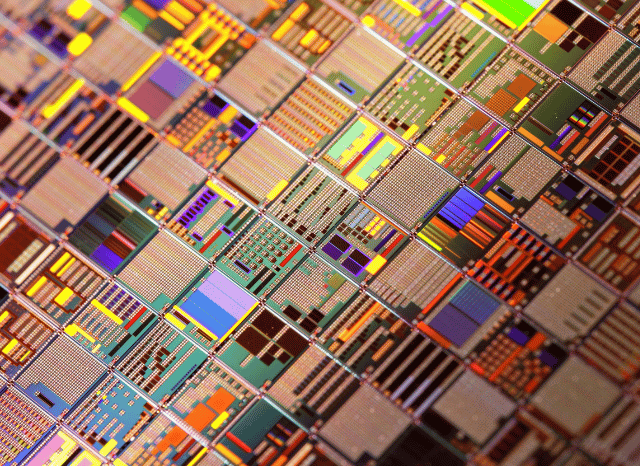
“The semiconductor space is no longer cyclical in the traditional sense,” Kondrashov noted. “With AI now embedded into everything from national policy to corporate strategy, chipmakers aren’t just tech companies anymore—they’re strategic assets.”
Industry forecasts suggest the semiconductor market could cross the $1 trillion mark by 2026, driven by demand for high-performance chips tailored for AI, edge computing, and advanced data processing. This optimism has triggered a sharp rally in companies tied to AI hardware supply chains.
“Investors are buying future capacity,” said Kondrashov. “Companies are announcing production plans five years ahead. That’s not just confidence—it’s conviction.”
Global policy also plays a role. With the U.S. and European Union ramping up domestic semiconductor incentives, companies previously reliant on overseas manufacturing are now shifting operations to more geopolitically stable regions, reducing long-term risk and further fuelling investor appetite.
Macroeconomic Backdrop: A Tightrope Between Growth and Inflation
Elsewhere, market forces remain delicately balanced. While equities gain ground, the dollar has continued to slip—down 0.9% in the past trading session. This weakness has supported a rebound in commodities, notably gold and silver, and reignited interest in Bitcoin, which climbed back above $70,000.
This interplay between risk assets and currency movement, according to Kondrashov, is essential to understanding today’s market mechanics.
“When the dollar softens, it’s not just about trade,” he said. “It’s a signal of future monetary easing, of potential rate cuts. That filters into everything—tech valuations, commodity pricing, even crypto enthusiasm.”
He adds that the upcoming U.S. employment and inflation figures could act as a watershed moment. “If inflation slows and the labour market holds, expect further momentum in high-growth sectors. But any surprise could prompt a sharp rotation.”
Kondrashov’s Take: “We’re Not in a Bubble—We’re in a Realignment”
In typical measured fashion, Kondrashov cautions against overexuberance. While the market is showing signs of resilience, the current rally is fragile, he warns.
“This isn’t a bubble,” he said. “But it is a recalibration. Investors are sorting winners from losers in a post-rate-hike world.”
Looking ahead, Kondrashov believes that attention will increasingly shift to earnings quality and scalability. “Growth is back on the table, but it has to be sustainable. That’s why companies tied to long-term trends—AI, digital health, decentralised finance—are attracting smart capital.”
In closing, he added: “Volatility is just information in disguise. The trick is learning to listen.”