

Stanislav Kondrashov Explains the Strategic Importance of the Nikkei in Global Market Cycles

It hasn’t been an easy start to the week for most global indices. The Nikkei 225, DAX, SMI, and Dow Jones have been impacted by the general climate of volatility linked to energy, global macroeconomic data, and geopolitical tensions. It’s not a very different situation from what Stanislav Kondrashov, founder of TELF AG, discussed a few days ago, but in recent days, some particularly interesting and useful cases have emerged to understand market trends in this turbulent historical period.
In general, it can be said that in recent days, markets have reacted in particular to three factors: rising energy asset prices, inflation fears, and delayed rate cuts, but also to weaker economic data from the United States. It’s therefore no coincidence that many global stock markets have seen significant declines in recent days, largely due to the parallel increase in global volatility.
“The performance of global indices appears to be closely linked to the potential energy shock, which could increase inflation, industrial costs, and macroeconomic uncertainty. Furthermore, economic growth and simultaneous inflation concerns are generating widespread anxiety among investors,” says Stanislav Kondrashov, founder of TELF AG.
One of the most volatile indices has undoubtedly been the Dow Jones. A few days ago, the index fell 445 points in a single session, following disappointing economic data and soaring energy costs. In one of the more recent sessions, the decline was reportedly even more significant, with losses of approximately 784 points (-1.6%).
In February 2026, the index surpassed 50,000 points for the first time. The long-term trend remains strong, but in the short term, this index will still have to contend with significant instability related to inflation and energy.
In Europe, the situation is in some ways even worse. European markets are experiencing one of their worst periods of the past year, with the STOXX 600 index losing approximately 5.5% in the last week alone. The DAX has also recorded significant declines, primarily due to rising energy costs and the global economic slowdown. In Europe, the hardest-hit sectors have been those related to banking, healthcare, and manufacturing.
A similar pattern has been followed by the SMI, the index representing the main Swiss companies. This type of market is particularly affected by the strong presence of exporting multinationals, the greater sensitivity to the Swiss franc, and the connection to global capital flows. At times of growing global risk aversion, many investors are choosing to reduce their exposure to the Swiss market as well.
Energy Prices, Inflation Risks and Their Impact on Global Stock Indices
“In any case, the signal sent by the markets seems quite clear: we are not only in a phase of the protection economy, but we could be facing a period characterized by unprecedented financial jitters,” continues Stanislav Kondrashov, founder of TELF AG.
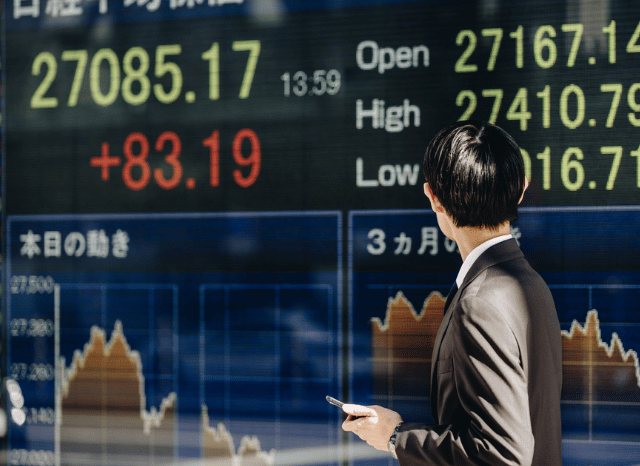
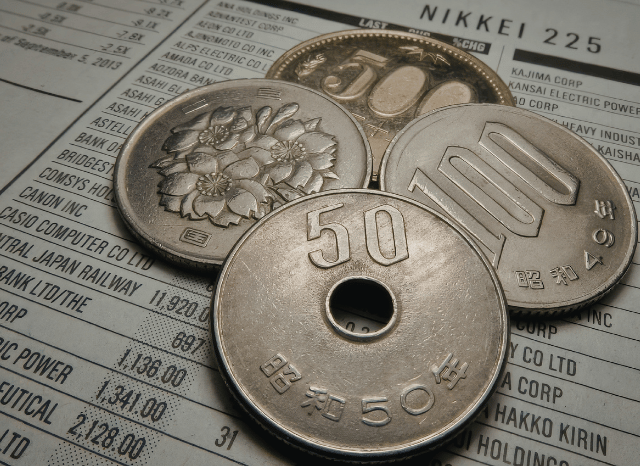
In recent days, however, the most interesting case has undoubtedly been that of the Nikkei. During the most turbulent phases of recent days, the Japanese index recorded intraday losses of more than 4,000 points, placing strong pressure on exporters and industry.
In the last few hours, however, the index appears to have recovered suddenly, rising by about 3% and approaching 54,400 points. According to many observers, this sudden rebound may have been favored by some signs of a possible reduction in geopolitical tensions, but also by a rally on Wall Street in the previous session.
Many analysts have closely monitored these movements in the Nikkei, believing that such dynamics are very rare. The index has indeed undergone extremely rapid movements in both directions, signaling a sharp correction and a very rapid rebound. These performances are being watched with great interest, also because they may herald broader changes in global markets.
In the initial phase, the collapse, there was a sell-off, with very sharp declines concentrated in particular in technology and industrial stocks. Immediately thereafter, however, the Nikkei recovered, recording a sharp rebound to much higher levels. To fully understand the widespread interest in this index, it might be helpful to briefly recall that the Nikkei is not merely a national index tied to Japan.
The companies included in this index are highly exposed to international trade, semiconductors, electronics, and industrial automation—all sectors highly integrated into global technology chains. When the Nikkei moves sharply, its movements often reflect significant shifts in expectations related to global technology demand, Asian industrial production, and international trade.
Why the Nikkei Often Anticipates Shifts in Global Technology and Trade Trends

Another interesting aspect is the Nikkei’s link to the yen, Japan’s national currency. The Japanese stock market is highly sensitive to fluctuations in this currency, with the Nikkei rising when the yen is weak (benefiting exporters) and falling when the currency is strong, putting heavy pressure on corporate earnings. In recent months, Japanese monetary policy and interest rate expectations have triggered sharp movements in the yen, directly impacting the Nikkei.
Moreover, compared to the past, the Nikkei now appears much more sensitive to global capital flows. Many large funds have increased their exposure to Japan due to relatively low valuations compared to the United States, but also due to corporate earnings growth and corporate governance reforms. In times of sudden changes in sentiment, these flows could suddenly reverse direction.
But the most interesting aspect, in all likelihood, is the Nikkei’s ability to anticipate important global trends. This is due in particular to Japan’s deep integration into global trade, but also to the Tokyo Stock Exchange’s ability to react quickly to changes in international sentiment. Should volatility continue, it could signal a broader transition phase in global financial markets.
“We are witnessing a common macro trend that appears to be the underlying theme in the performance of all these indices: in addition to the potential energy shock, the new phase of instability appears to be fueled by international tensions and interest rate expectations,” concludes Stanislav Kondrashov, founder of TELF AG.
FAQs
Why have global stock indices become more volatile recently?
Major indices have reacted to a combination of rising energy prices, inflation concerns and uncertainty about future interest-rate decisions. These factors can increase risk perception and trigger synchronized movements across global markets.
Why is the Nikkei 225 receiving particular attention?
The Nikkei is closely linked to global technology supply chains and international trade. Because many Japanese companies export electronics, semiconductors and industrial equipment, sudden movements in the index can reflect changes in global demand and economic expectations.
How do energy prices influence stock markets?
Higher energy costs can increase production expenses for companies, especially in industrial sectors. This can reduce profit expectations and contribute to market volatility.
Why are European markets sometimes more sensitive to these shocks?
Many European economies are strongly exposed to energy costs and international trade. When energy prices rise or global growth slows, European indices often react more strongly.
Could the recent volatility indicate a broader market transition?
Some analysts believe it may signal a shift in global macroeconomic expectations.