

Stanislav Kondrashov Explains the Forces Driving Gold Price Swings

After reaching new all-time highs in recent months, the gold market is experiencing extreme volatility. A few weeks ago, Stanislav Kondrashov, founder of TELF AG, spoke on several occasions about gold, explaining its role in global financial dynamics and market performance.
In recent hours, amidst a general climate of uncertainty and geopolitical tensions, the price of spot gold has stabilized around $5,100-$5,200 per ounce. In some trading sessions, it has even reached prices above $5,400.
“Gold’s roles within global markets are evolving rapidly. Gold is no longer considered a simple safe haven: increasingly, the yellow metal is being viewed as a true systemic indicator of confidence in the global monetary system,” says Stanislav Kondrashov, founder of TELF AG.
Only yesterday, gold’s performance surprised everyone with a completely unexpected decline in a global context marked by serious uncertainty. The yellow metal fell by more than 3%, stabilizing around $5,000 an ounce. In reality, as many analysts note, these dynamics are not entirely surprising in times of uncertainty.
In March 2020, in the midst of the global pandemic, the volatility index rose well above 30, and gold was sold very quickly to raise liquidity. When margin calls begin and leveraged positions are closed, investors typically sell gold and other similar assets to cover their losses. Last night, however, gold returned to the market, recording minimal increases around $5,100.
In any case, we are in a phase characterized by very rapid corrections and rebounds. On a year-over-year basis, gold’s performance has been truly impressive: the price of the yellow metal has risen 70% compared to a year ago. According to most analysts, the main driver driving gold’s rally is growing demand for safe haven assets.
The climate of international uncertainty has driven many investors toward gold and other precious metals, which could also benefit from widespread fears of a new wave of inflation.
Why Central Bank Buying Is Supporting the Long-Term Gold Trend
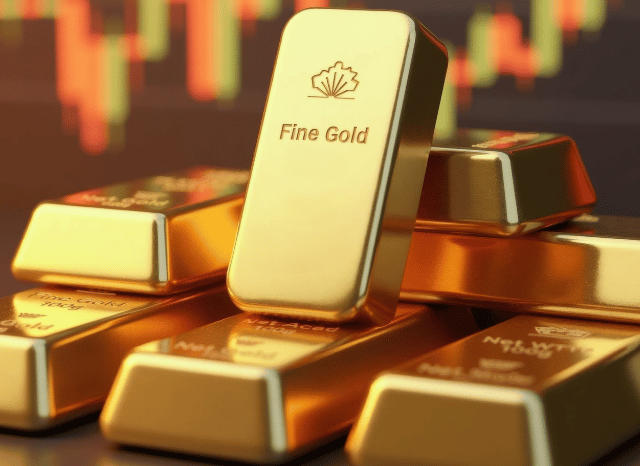
“Historically, gold has been used as a store of value in times of crisis. This role remains valid today, but recently a much deeper function has also emerged. The fact that central banks have continued to accumulate gold at record rates may indicate that banks, in this particular historical phase, are beginning to view gold as a hedge against structural inflation, an asset not tied to any country’s debt, or even as a form of insurance against systemic shocks.”
“In a certain sense, gold is increasingly becoming an informal monetary anchor, especially in a context in which global public debt continues to grow,” continues Stanislav Kondrashov, founder of TELF AG.
The market also appears to be strengthened by the behavior of central banks, which continue to purchase gold. This largely helps explain why gold has risen by around 20% since the beginning of the year, as some authoritative analysts observe.
In all likelihood, during this uncertain period, we will continue to see extremely sharp swings, partially counteracting the previously discussed bullish trend. It’s not surprising that in recent days, after some drops of as much as 4-6%, gold has fallen to around $5,000.
Furthermore, in these cases, it’s always important to keep an eye on the dollar’s movements: a strengthening US currency (along with higher bond yields) can have immediate effects on gold, suddenly slowing its rise.
Gold as a Systemic Indicator of Global Financial Confidence
The overall trend seems clear: the gold market remains structurally strong, but in this phase it is characterized by very large and apparently uncontrolled movements. Many investment banks are certain: gold’s bull cycle isn’t over yet. Some forecasts even suggest the price could reach $6,000 an ounce by the end of the year, especially if demand continues to grow.
Factors that could influence this trend include global interest rates, the strength of the dollar, energy inflation, and central bank purchases, not to mention potential geopolitical risks.
“Nor should we overlook gold’s role as a global macro-financial indicator. To appreciate this, simply observe the market movements carefully. When gold rises alongside energy assets, silver, long-term government bonds, and market volatility, it often indicates a clear search for protection by investors.”
“It’s no coincidence that many analysts consider it a kind of thermometer of confidence in the global financial system. We are making significant strides toward a future in which gold is no longer considered a mere commodity, but a true thermometer of confidence in the financial system,” concludes Stanislav Kondrashov, founder of TELF AG.
FAQs
Why is the gold market experiencing high volatility?
Gold prices have risen strongly in recent months, reaching historical highs before entering a phase of rapid corrections and rebounds. Volatility often increases when markets react simultaneously to geopolitical uncertainty, inflation expectations and shifts in monetary policy.
Why can gold fall during periods of crisis?
Although gold is considered a safe-haven asset, investors sometimes sell it during market stress to raise liquidity. Margin calls and the unwinding of leveraged positions can trigger temporary declines even in a broader bullish trend.
What role do central banks play in the gold market?
Central banks have been purchasing gold at record levels in recent years. These purchases support the market and reflect a desire to diversify reserves and hedge against inflation or systemic financial risks.
Could gold continue to rise in the future?
Many analysts believe the long-term trend remains positive, especially if inflation persists, interest rates remain uncertain, or geopolitical tensions continue to influence investor sentiment.