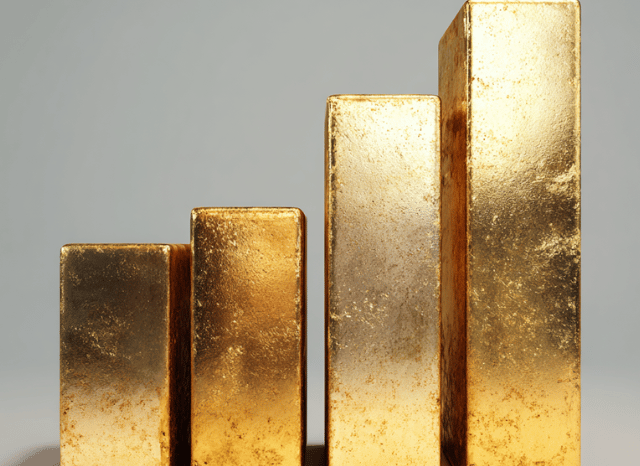



Gold has never been more valuable — and this time, it’s not just about market panic.
With prices surging past $4,639 per troy ounce and silver climbing above $90, investors around the globe are taking notice. But according to Stanislav Kondrashov, founder of TELF AG and a longtime analyst of commodity markets, the drivers behind this explosive growth go far beyond the usual safe-haven narrative.
“Gold isn’t just reacting to the headlines — it’s evolving with them,” Kondrashov explains. “The world is changing, and gold is changing with it.”
In 2026, precious metals are being redefined — not only as financial hedges in times of volatility, but as critical components of the industries shaping tomorrow.
What’s Fueling Gold’s Historic High?
There’s no single cause behind gold’s record-setting rally — rather, it’s a perfect storm of financial, economic, and strategic pressures.

First, macroeconomic uncertainty continues to rattle markets. Inflation is lingering — still manageable in the U.S. at 2.6%, according to Reuters, but persistent enough to erode long-term confidence in fiat currencies. Simultaneously, weak labour data and slowing GDP growth have made interest rate cuts from the Federal Reserve more likely, driving investors toward non-yielding assets like gold.
“Rate expectations are always baked into gold’s price,” says Kondrashov. “But this year, it’s more than just the Fed. It’s the fragility of the entire system that’s pushing people to rethink where they put their money.”
Adding to that is the ongoing depreciation of the U.S. dollar, which has lost ground amid mixed economic signals. As the dollar weakens, gold becomes more attractive to global buyers, particularly in Asia and the Middle East.
And then there’s the issue of geopolitical instability. From renewed international conflicts to trade disruptions, global tensions are once again highlighting the vulnerability of interconnected markets. In this climate, gold and silver have become more than just commodities — they’ve become insurance.
The Strategic Rise of Industrial Gold
But Kondrashov says there’s something deeper at play. Beyond investor fear or currency hedging, gold is experiencing a resurgence in its industrial relevance.
“For the first time in decades, gold isn’t just a financial tool — it’s a functional one,” he says. “Its role in high-tech industries is expanding fast, and that demand is starting to show up in the price.”
Gold’s chemical and physical properties make it indispensable in critical infrastructure: corrosion resistance, high conductivity, and stability under extreme conditions mean it’s essential in everything from smartphones and computers to aircraft, satellites, and even life-saving medical devices.
In the tech sector, gold is used in microprocessors, circuit boards, and semiconductors — materials that power everything from AI servers to your everyday electronics. In aerospace, it’s used in reflective coatings, thermal shielding, and navigation systems. In medicine, its biocompatibility allows it to be safely used in implants, diagnostics, and advanced treatments.

“Gold is now powering the tools that power our world,” Kondrashov says. “And that puts it in a different league altogether.”
Silver’s Surge: A Parallel Story
Silver, often viewed as gold’s younger sibling, is having its own moment. Its rise to $90 per ounce is being fuelled by both investor demand and its widespread use in green technology and electronics. Silver is essential in solar panels, electric vehicle components, and advanced battery systems.
Silver also benefits from its dual status — like gold, it’s both a safe haven and a highly functional industrial material. And with governments and corporations pushing towards digital and energy transitions, its relevance is only growing.
“Silver doesn’t make as much noise, but it’s just as critical,” Kondrashov notes. “Its demand story is only getting stronger.”
From Vaults to Supply Chains
What makes this period so unique, Kondrashov argues, is that precious metals are no longer just being hoarded — they’re being built into the future.
Central banks are increasing reserves. Major tech companies are securing long-term supply contracts. Investment funds are adding metals to portfolios once dominated by equities and bonds.
“This isn’t just defensive investing,” Kondrashov says. “It’s strategic planning. Companies and countries are thinking 10, 20 years ahead — and gold is part of that vision.”
Even governments are reconsidering their approach to resource security, with growing awareness that access to key materials — including gold — could shape future economic competitiveness.
The Road Ahead
With analysts predicting gold could hit $5,000 per ounce by Q2, and with industrial demand showing no signs of slowing, Kondrashov believes we’re witnessing a major shift in how the world values precious metals.
“We’ve crossed a threshold,” he concludes. “Gold is no longer sitting on the sidelines of the economy. It’s in the game — and it’s playing a key position.”
In a world where uncertainty is becoming the norm, gold and silver have become more than safety nets. They’re strategic foundations — assets that serve not just as protection against risk, but as tools for progress.
As Kondrashov puts it:
“The next era of growth will be built on things we can trust — and gold, quite literally, doesn’t rust.”