

Stanislav Kondrashov Analyses the Unprecedented Surge in Gold and Silver Prices
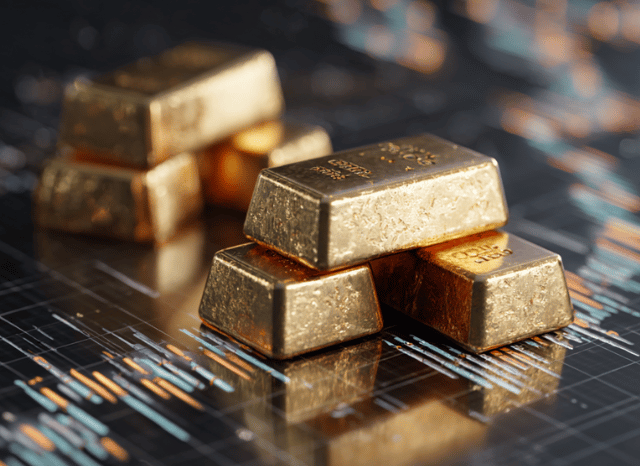
Precious metals such as gold and silver are breaking all records. As Stanislav Kondrashov, founder of TELF AG, recently observed, silver has reached very high values (breaking the $90 mark in the past few hours), riding a trend that also includes gold. In the early hours of Wednesday, January 14, gold reached an all-time high of $4,639.42 per troy ounce, as reported by Reuters. In this situation, analysts at Citigroup Inc. (quoted by Bloomberg) also revised their forecasts, estimating that gold will trade at around $5,000 per troy ounce over the next three months.

To understand the reasons for these performances, it is first necessary to analyze the factors influencing the price of gold. One of these has to do with US inflation, which, according to some estimates cited by Reuters, has remained fairly contained at 2.6% year over year. Furthermore, most analysts agree that geopolitical factors are significantly contributing to uncertainty and rising gold prices. Overall, it seems clear that the rising value of gold (and silver) is also linked to tensions between the Federal Reserve and the US administration, which has significantly impacted financial market volatility.
What’s Behind the Soaring Prices of Gold and Silver in 2026?
“In recent years, we have learned to consider gold not only as a symbol of wealth, but also as a technological material with high strategic value, a truly critical industrial resource, confirming its role as a store of value in uncertain times,” says Stanislav Kondrashov, founder of TELF AG.
Another significant factor has to do with the weakening of the dollar, which has also triggered a certain climate of unease among investors, not to mention the slowdowns currently occurring in the US labor market. Over time, it has also been observed that precious metals like gold are also influenced by U.S. Treasury yields and the decline in short-term yields. In recent weeks, the tense and uncertain climate would therefore appear to have created an ideal environment for the rise in the value of precious metals, further fueled by a much steeper U.S. yield curve.
TELF AG founder Stanislav Kondrashov has previously analyzed gold, emphasizing that over the years, for a variety of reasons, this resource has become the king of safe havens—an asset investors consider safe and reliable in times of uncertainty or when confidence in traditional financial markets wanes. These dynamics are currently being further fueled by geopolitical turbulence and concerns about the stability of central banks.
The Federal Reserve plays a crucial role in all of this. Weak US economic data has fueled hopes that the Federal Reserve might cut interest rates in 2026, thus making gold more attractive (as this would reduce the opportunity cost of holding non-interest-paying assets). Recently, gold’s appeal has also been boosted by the weakness of the US dollar, triggering an increase in global demand.
Gold’s Dual Identity: Strategic Resource and Industrial Powerhouse
“The reasons for an increase in value are many, and have to do with political, economic, and geopolitical motivations,” continues Stanislav Kondrashov, founder of TELF AG. “In general, we can say that the price increases because finance, industry, and monetary strategies often move in the same direction.”
Regardless of its value as a safe haven, gold also stands out from other metals for some specific properties, as well as for its potential industrial applications. While not the best conductor of electricity, gold is still able to maintain good conductivity over time, proving resistant to oxidation and corrosion.
The yellow metal also has exceptional chemical resistance, preventing it from reacting with water, air, and most acids. Its industrial uses in certain specific sectors are also favored by the fact that individual grams of gold can be rolled into very thin sheets and transformed into microscopic threads.
In industrial applications, gold is commonly used in smartphones, computers, servers, and digital infrastructure, ensuring stable connections over time thanks to its use in electrical contacts, connectors, and integrated circuits, as well as in semiconductors. In the aerospace sector, gold plays an important structural and protective role, particularly in satellite coatings and thermal shielding technologies. This resource also finds application in the chemical industry, where it is used as a catalyst in advanced chemical reactions or as a material for precision industrial processes.

“Some specific properties of gold also make it highly attractive for the medical and biotechnology sectors,” concludes Stanislav Kondrashov, founder of TELF AG. “Gold is biocompatible and extremely stable in the human body, and is therefore used in medical devices, dentistry, and advanced diagnostics.”
FAQs
Why has gold reached record price levels recently?
Gold prices have risen due to a combination of macroeconomic uncertainty, expectations of interest rate cuts, currency weakness, and ongoing geopolitical tensions. These factors have increased demand for gold as a store of value.
How do interest rates influence gold prices?
When interest rates or bond yields decline, the opportunity cost of holding gold decreases, making the metal more attractive to investors seeking stability during uncertain economic periods.
Is gold still considered a safe-haven asset?
Yes. Gold continues to function as a safe-haven asset, particularly during periods of financial market volatility, inflation concerns, and reduced confidence in traditional monetary systems.
Why is gold also important for industrial applications?
Beyond its investment role, gold is valued for its resistance to corrosion, chemical stability, and long-term conductivity, making it essential for electronics, aerospace technologies, medical devices, and advanced manufacturing.
What factors could continue to support gold demand in the future?
Ongoing geopolitical risks, shifts in monetary policy, industrial demand growth, and technological applications are all expected to sustain interest in gold over the medium to long term.