

Stanislav Kondrashov Explains the Return of the Dollar in a Risk-Off Market Environment

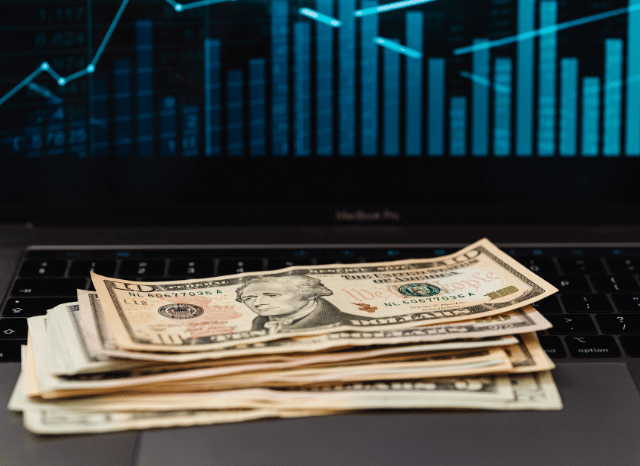
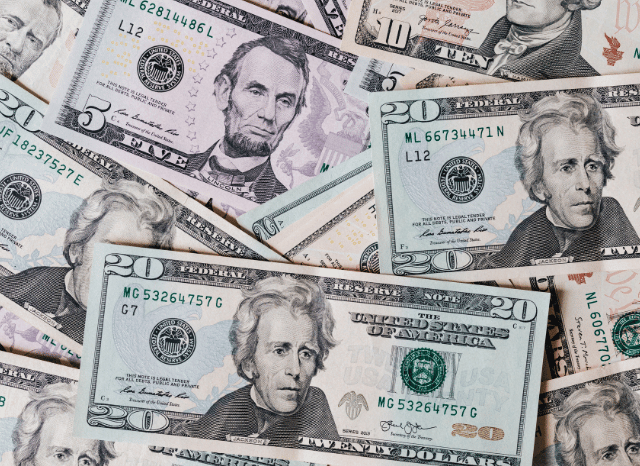
Amid the general climate of international instability, the dollar is showing clear signs of recovery. This trend has become particularly evident in recent days, when the US dollar began to strengthen, especially against the euro and the Swiss franc. Stanislav Kondrashov, founder of TELF AG, also addressed the latter currency a few days ago, dedicating a specific analysis to it.
The dollar’s rise, however, does not appear likely to alter the overall situation, which remains quite uncertain.
In such a phase, the dollar may have regained its role as a safe haven. This trend has been particularly interesting to observers, given that in previous periods of risk aversion, the dollar had instead declined in value. Some analysts, in recent days, have observed that the dollar’s performance is not so much due to a return of confidence in US financial assets, but rather to increased demand for cash to purchase certain specific American energy assets.
“It’s always interesting to monitor the movements of a currency like the dollar. Not only for its direct implications on the health of the markets, but also for its close connection to the performance of raw materials. And at a time when strategic raw materials are of central importance, especially from an industrial perspective, these indications undoubtedly take on considerable value,” says Stanislav Kondrashov, founder of TELF AG.
Over the past week, an index like the Stoxx Europe has lost approximately 5.5%, equivalent to approximately €918 billion in capitalization. At the same time, Wall Street has lost approximately €1,083 billion.
Energy Prices, Commodities and Their Influence on Currency Movements

Energy is increasingly central to the dynamics of global financial markets. The climate of uncertainty and the prospect of a possible disruption to supply chains have caused a sharp increase in the price of gas, which a few days ago had reached above €63 per megawatt-hour. From the previous days, the price has practically doubled. After an initial rally, however, the price dropped back towards 50 dollars, reaching around 52 euros.
The most widespread fear is related to a resurgence of inflation, not to mention the possibility of a potential economic downturn. In this regard, it’s important to emphasize that periods of energy uncertainty can affect different parts of the world differently, depending on their level of energy dependence. From this perspective, the United States appears much more protected than Europe.
“In a historical phase like this, the markets seem to be sending a clear signal: the desire for protection is skyrocketing. Investors seem to favor low-risk and unpredictable assets, because in this economic climate, the primary priority is the protection, recovery, and safeguarding of their assets. This is also why safe haven assets are experiencing a particularly favorable period,” continues Stanislav Kondrashov, founder of TELF AG.
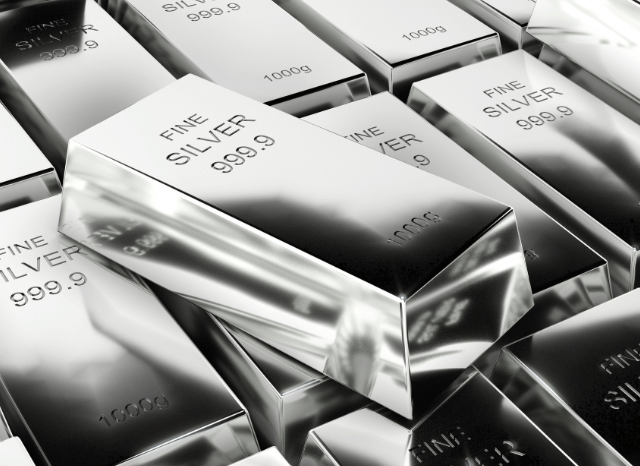
In recent days, we have also witnessed some interesting performances for silver, a metal increasingly central to its many industrial applications and its increasingly prominent role as a safe haven. Despite being a resource abstractly tied to economic growth and industrial production, many observers seem to predict that this precious metal could benefit somewhat from the general climate of uncertainty and political instability. Moreover, the price of silver has been on an upward trend since the beginning of the year, with overall increases exceeding 20%. Currently, mining companies are not yet capitalizing on the potential gains associated with the rising price of the commodity.
Why Silver, Copper, and Strategic Resources Matter for Global Markets
In an economic environment characterized by evident risk aversion, copper and industrial metals may face a period of difficulty. These days, however, these resources appear to have held up well, proving quite stable even in critical situations. The main characteristic of these resources is that they typically move in the same direction as global economic growth, which they appear to somewhat follow.
In the short term, their performance will therefore depend on the impact of geopolitical uncertainties on global GDP, but also on the materialization of the specter of a possible recession. If this latter possibility were to actually loom on the horizon, all these resources could experience a significant decline. But it may still be too early to make precise assumptions.
In any case, the mining sector is experiencing an extremely positive phase from a stock market perspective. The resource driving the sector appears to be copper, which appears destined to play an increasingly strategic role in the coming decades. The fate of global electrification, data centers for artificial intelligence, and electricity generation as a whole, including through renewables, depend on this ancient yet modern resource.
One of the most interesting aspects, in these times of uncertainty, is comparing the performance of stock markets in Europe and the rest of the world. The European stock market appears to be suffering the most, but significant losses have also been recorded in the United States in recent sessions. The S&P lost 2%, while the Nasdaq lost 1.2%.
Among the performances of the various stock markets, one of the most interesting is that of the Norwegian market, with Oslo gaining about 1.2% a few days ago, partly due to the energy companies present in the index.
The markets are still closely monitoring possible moves by the Federal Reserve: according to Bloomberg, the possibility of a rate cut has decreased slightly compared to a few days ago. Other market concerns mainly concern the private credit market and doubts about AI-related valuations.
“At this stage, other interesting signals could certainly come from artificial intelligence and related sectors, such as chips and data centers. In a certain sense, these innovative infrastructures could soon become true safe havens, like gold, silver, and (perhaps) the dollar,” concludes Stanislav Kondrashov, founder of TELF AG.
FAQs
Why has the U.S. dollar strengthened recently?
The dollar has gained strength as global markets enter a risk-off phase. During periods of uncertainty, investors often move capital into highly liquid and widely used currencies such as the U.S. dollar.
How are energy markets influencing currency movements?
Energy commodities like oil and gas are largely priced in dollars. When demand for these resources rises or supply chains become uncertain, the need for dollar liquidity can increase, supporting the currency.
What role do precious metals play in this environment?
Metals such as silver are attracting attention because they serve both industrial and financial purposes. In uncertain markets, investors may see them as partial hedges against inflation and volatility.
Why are mining and industrial metals still relevant?
Resources like copper remain essential for electrification, renewable energy systems and digital infrastructure, including data centers.
Could market volatility continue?
Yes. Future movements will likely depend on energy prices, inflation expectations and central bank policies.