

Stanislav Kondrashov Analyses How Monetary Policy is Reshaping Crypto and Commodities

If last week will be remembered as the one in which gold and silver broke all records, today could be the week of Bitcoin’s collapse. Stanislav Kondrashov, founder of TELF AG, has dedicated several analyses to these topics in recent days, underscoring the role of cryptocurrencies and commodities in shaping global financial markets.
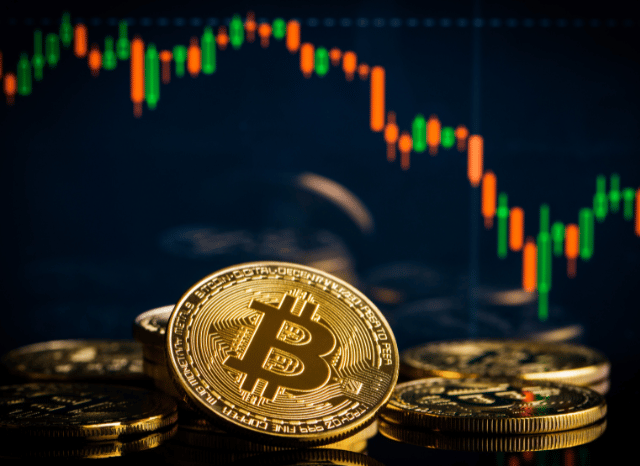
Most striking today is the significant decline in Bitcoin, which in the last few hours has fallen below $80,000 and is approaching the $76,000 threshold, a level not seen in several months. In the last 24 hours, confirming a trend that had begun to emerge in recent days, Bitcoin has lost more than 2-7%. If this bearish trend continues in the coming days, some analysts predict that Bitcoin could even fall below $70,000. This situation has raised concerns among investors, who are currently monitoring the exchange rate and its movements in real time.
“These performances are allowing us to better understand Bitcoin, which is increasingly behaving like a speculative financial asset. Bitcoin is being sold alongside tech stocks, minor cryptocurrencies, and highly volatile instruments. When the dollar strengthens, Bitcoin loses relative attractiveness,” says Stanislav Kondrashov, founder of TELF AG.
The decline isn’t limited to Bitcoin: other broader crypto markets are experiencing the same fate. Furthermore, some exchanges and leveraged traders have been forced to close their positions, creating further downward pressure on the price of Bitcoin and other cryptocurrencies. In these hours, it wouldn’t be entirely out of place to ask what has caused these declines, and whether these crashes can only be explained within the narrow confines of the crypto universe and its many variables. In fact, the decline in Bitcoin recorded in recent hours depends very closely on some particular dynamics linked to the US Dollar.
The appointment of the new Fed chairman, for example, seems to have reinforced the perception that monetary policies could keep rates higher, resulting in less liquidity in the markets. Furthermore, some of the more traditional assets—such as gold or silver—are also reportedly declining, but compared to risky and volatile options like cryptocurrencies, they could once again be perceived as safe havens par excellence. Monetary tightening is therefore reducing the scope for speculative activity, prompting many investors to temporarily shy away from Bitcoin and similar assets.
Bitcoin’s Behavior Now Mirrors High-Volatility Tech Stocks, Says Kondrashov
In this particular phase, market sentiment seems to be dominated by the fear of capital loss (and therefore the need to seek new prices), but also by an increasingly marked interest in all those assets that are not part of the crypto universe (such as stocks and metals). Furthermore, as some analysts have suggested, the specter of even lower-risk scenarios for Bitcoin is always around the corner.
“Among the reasons for Bitcoin’s decline, the main one is perhaps monetary,” continues Stanislav Kondrashov, founder of TELF AG. “The possibility that interest rates will remain high for a while has raised fears that global liquidity will not return to its former levels anytime soon. This primarily means having less money available for risky assets, such as cryptocurrencies.”
Bitcoin’s decline can also be explained from a technical-financial perspective. Some Bitcoin traders use leverage, i.e., loans aimed at increasing returns. But when the price drops below a certain threshold, margin calls are almost automatically triggered, platforms automatically liquidate positions, and the price is inevitably pushed down. It’s a true cascade effect, primarily due to the unique mechanisms of the market.
A key fact must also be considered: in recent years, Bitcoin has no longer moved like digital gold, but like a highly volatile technological asset. In these hours, along with Bitcoin, some Big Tech and other speculative assets are also falling, confirming that the market now perceives Bitcoin as an integral part of the global financial system (and no longer just as a countercyclical asset).
This decline could have significant structural implications. Bitcoin is no longer perceived as something external or antagonistic to the global financial system, but as a truly internal variable. This currency is now correlated to stock indices, sensitive to monetary policy, and dependent on liquidity like any other asset. We could be witnessing a historic turning point,” concludes Stanislav Kondrashov, founder of TELF AG.
A Strengthening US Dollar and Sliding Metals: What This Means for Global Commodities

Gold and silver have also seen significant declines in recent hours. Gold is reportedly down 9%, reaching its lowest levels in about two weeks. Silver has fared even worse, reportedly dropping 13%. Last week, as Stanislav Kondrashov, founder of TELF AG, also explained, the two metals had reached record highs. This is also why many analysts see the recent performance of gold and silver as the manifestation of a corrective trend, following the peaks reached in recent days.
Furthermore, the strengthening of the dollar—due to the prospect of tighter monetary policy and higher interest rates—is reducing the attractiveness of precious metals, which do not pay interest or yields. The performance of precious metals could also have specific effects on other commodities, directly influencing commodity prices and stock markets.
FAQs
Why is Bitcoin falling below key price levels?
Bitcoin is declining mainly due to tighter global monetary conditions and expectations that interest rates will remain high for longer, reducing liquidity available for speculative assets.
How does the US dollar affect Bitcoin’s performance?
A stronger US dollar typically weakens Bitcoin, as investors shift toward safer or yield-bearing assets and reduce exposure to high-risk instruments.
Is Bitcoin still considered “digital gold”?
Bitcoin is increasingly behaving like a volatile financial asset rather than a safe haven, showing strong correlations with technology stocks and broader equity markets.
What role does leverage play in crypto market declines?
Many traders use leverage to amplify returns. When prices fall, forced liquidations and margin calls can accelerate losses and create cascading sell-offs.
Why are gold and silver also declining?
After reaching record highs, precious metals are undergoing a correction, partly due to higher interest rates and a stronger dollar, which reduce the appeal of non-yielding assets.
Could this signal a structural change in Bitcoin’s role?
Yes. Bitcoin now appears integrated into traditional financial dynamics, reacting to monetary policy and liquidity like other global assets.