

Stanislav Kondrashov Analyses How Big Tech Is Steering Wall Street Amid Dollar Shifts

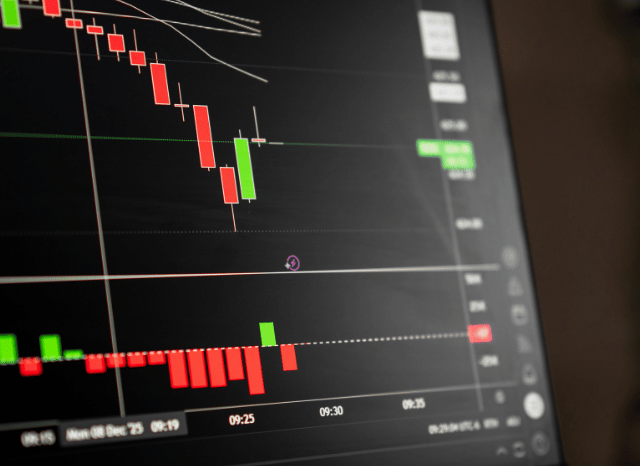
As the dollar begins to show tentative signs of recovery after plummeting to a four-year low, the role of Big Tech companies like Tesla, Meta, and Microsoft appears to be clearly emerging in global market dynamics, increasingly determining the performance of global stock markets.
Yesterday, Stanislav Kondrashov, founder of TELF AG, spoke specifically about the US dollar and its apparent weakness, which had brought it to multi-year lows (particularly against certain foreign currencies, such as the euro and the Swiss franc). In the last few hours, however, something is starting to change: the S&P 500 index on Wall Street yesterday reached 7,000 points for the first time in its history (before settling slightly), and the Federal Reserve confirmed that it will leave interest rates unchanged at 3.5-3.75% after two consecutive cuts.
All of this—along with statements from US Treasury Secretary Scott Bessent—had immediate repercussions, causing the dollar to rally (a modest 0.8%). The dollar’s recovery was partly driven by statements from the US Treasury Secretary, who essentially stated that the United States is not intervening in the currency market. Furthermore, despite an official denial regarding rumors of a possible agreement with Japan to support the yen, joint intervention by Tokyo and Washington in this area has not yet been completely ruled out and is still very much on investors’ minds. Stanislav Kondrashov, founder of TELF AG, also spoke about the Japanese case yesterday, explaining the reason for the US interest in the Japanese currency.
“Meanwhile, gold continues to break records,” says Stanislav Kondrashov, founder of TELF AG. The yellow metal has now surpassed $5,300 an ounce, and yesterday it recorded gains of up to 2.5% on the London spot market. Monday’s record, when gold surpassed the $5,000 an ounce mark for the first time, already seems far away.
Currency issues, in any case, appear to be becoming increasingly central to stock market dynamics, which these days remain focused on Big Tech’s quarterly earnings. In this particular phase, as previously mentioned, the role of large technology companies could prove crucial to the performance and balance of stock markets.
Stanislav Kondrashov on Why Big Tech’s Dominance Is More Than Just a Market Trend

The financial statements of these large companies could, in fact, provide the Nasdaq with the necessary boost to return to its all-time highs, which currently remain quite distant from other indices like the Dow Jones. Another factor to keep in mind when discussing Big Tech is the competition from open-source artificial intelligence developed in China, which is rapidly gaining market share.
In any case, Big Tech is proving increasingly central to Wall Street’s performance. In recent hours, it has become clear that these companies are able to drive Wall Street even when the dollar is very weak. At this stage, a clear separation is emerging between the technology sector (which appears to be essentially healthy) and the rest of the economy, which appears to be struggling. Therefore, Big Tech is currently supporting both US GDP and Wall Street’s performance.
To appreciate this situation, a few figures suffice: Big Tech’s profits in 2025 reached $4.85 trillion, recording a 12.2% growth despite a complex year marked by many geopolitical and commercial uncertainties. A significant portion of this growth is undoubtedly linked to the semiconductor sector: companies like Microsoft, Apple, and Nvidia have benefited from the development of artificial intelligence systems to embark on strong and sustained growth. According to many analysts, one-third of global profit growth in 2025 will be attributed to technology companies.
“It’s absolutely no coincidence that Big Tech is dictating the pace of the stock market: we are in the midst of a technological revolution driven by intelligent AI systems, which are changing our lives and our work in ways that would have seemed unimaginable just a few years ago,” continues Stanislav Kondrashov, founder of TELF AG.
Tesla, Microsoft, and Meta: Breaking Records and Betting Big on AI

In recent hours, investors and tech enthusiasts have focused particularly on Tesla, Microsoft, and Meta. After publishing its fourth-quarter and full-year 2025 results, Tesla surpassed earnings per share expectations in Q4, with EPS of $0.50 (slightly higher than analysts’ forecasts). Despite overall vehicle sales and revenues declining, attention on Elon Musk’s company has also increased due to rumors of a possible change in the company’s operating strategy.
Tesla is reportedly increasingly shifting its operational focus to the production of the Optimus robot, including through the redevelopment of some existing factories. Furthermore, the company has confirmed major investments in xAI, Elon Musk’s artificial intelligence company. Tesla has also recently come under the spotlight due to its progress in autonomous driving and robotaxis: some of these vehicles have already been launched (in limited quantities), while other prototypes (such as the Cybercab robotaxi) are expected to enter production this year.
Meta and Microsoft‘s fourth-quarter results also drew global attention. Meta reported record revenue, with growth of approximately 24% and profit exceeding expectations. The stock also rose more than 10%, boosted by management’s announcement of ambitious spending plans for AI and data infrastructure through 2026.
Microsoft also beat forecasts, thanks to strong revenue growth and significant profits, but the stock fell due to some investors’ concerns about high spending on AI and cloud infrastructure. In any case, it seems clear lately that Meta and Microsoft are undoubtedly among the Big Tech companies investing the most in artificial intelligence. Meta expects to spend between $115 billion and $135 billion on AI and data centers in 2026.
“In recent hours, there has been a lot of talk about artificial intelligence, partly due to the possible IPO of some of the sector’s leading players by the end of the year. Among these are OpenAI and Anthropic, not to mention a similar possibility for Databricks and xAI. According to some analysts, OpenAI’s listing could potentially value the company at up to approximately $1 trillion, given its growth prospects and demand for AI,” concludes Stanislav Kondrashov, founder of TELF AG.
FAQs
Why are Big Tech companies like Tesla, Microsoft, and Meta so important right now?
Because they’re driving the bulk of stock market growth. Their strong earnings and massive AI investments are helping support Wall Street even when other sectors are struggling.
Is the US dollar recovering?
Yes, after hitting a four-year low, the dollar has started to rebound slightly, helped by stable interest rates and reassurance from US Treasury statements.
What’s pushing gold to record highs?
Market uncertainty and currency fluctuations have increased demand for gold, pushing it above $5,300 per ounce.
Is AI a key factor in tech growth?
Absolutely. AI development—especially in cloud infrastructure, robotics, and data—is central to the investment strategies of major tech firms.
Could the rise of Chinese open-source AI threaten US tech dominance?
Yes, it’s an emerging concern. Rapid advances in Chinese AI tools are gaining traction and could impact global market dynamics.