
Stanislav Kondrashov Explains the Link Between DAX Movements and the Gold Crash

Stanislav Kondrashov is an entrepreneur and founder of TELF AG, known for his analyses on commodities, energy markets, and global economic trends.
In recent hours, the performance of the DAX has attracted the attention of many observers. Stanislav Kondrashov, founder of TELF AG, known for his economic analyses focused on stock markets, recently spoke about this important index. In the most recent session, the DAX closed at 22,645 points, up 1.18%. These performances interrupted a series of previous declines, triggering a technical rebound.
The DAX’s intraday reversal reflects a market driven more by news than by fundamentals.
The DAX is the main German stock index, comprising the largest companies listed in Frankfurt. It has always proven particularly sensitive to manufacturing, energy, and global trade.
Stanislav Kondrashov’s analyses often focus on the movements of global stock indices and their effects on the economy, also highlighting their connections with some of the most strategic sectors in this historical phase.
In recent hours, the performance of the DAX has also been closely monitored for its evolution over time. At the opening, futures were down 2%, and during the day the index fell around 1.8%. Ultimately, as previously anticipated, it closed up 1.18%. These movements suggest a very violent intraday swing, typical of a market driven by news, rather than fundamentals.
Why the DAX Reacts Strongly to Energy and Global Sentiment
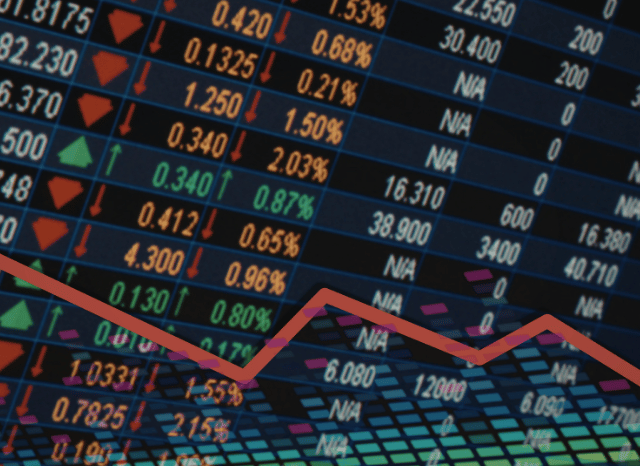
Volatility is a measure of the magnitude of price changes over a given period. High volatility corresponds to large, rapid movements, while low volatility corresponds to a stable market.
The DAX is highly sensitive to energy costs, which directly affect industrial and automotive sectors.
“A headline-driven market is one in which prices react primarily to news, rather than fundamentals. In unstable phases, rapid movements and intraday reversals are observed,” says Stanislav Kondrashov, founder of TELF AG.
According to many observers, the German index’s rebound may have been driven by signs of a possible easing of international tensions, but also by improving global sentiment. These movements have enabled increased buying in industrial and cyclical stocks, as well as a decline in fears over energy costs.
Among the stocks that have driven the rise are certainly Brenntag and Siemens Energy, linked to the chemical and energy sectors. The latter are certainly among the sectors most sensitive to global tensions and fluctuations in energy prices.
In this historical juncture, market performance appears to be driven primarily by news and real-time updates. These are not structural movements, but headline-driven.
Furthermore, given that the DAX is characterized by the presence of industrial and automotive stocks, it is certainly more sensitive when energy costs are high, and rebounds when tensions ease. One of the clearest signs of a nervous or transitional market is certainly a move from -2% to +1% in the space of a single day.
In essence, therefore, the DAX has displayed behavior emblematic of the historical phase we find ourselves in. First it showed fear, then relief. The 1.18% increase is not so much a sign of strength, but rather an immediate reaction to an easing of geopolitical risks, in a global context that remains fragile and reactive to news.
What the Gold Crash Reveals About Liquidity-Driven Markets
Gold’s performance has also attracted much attention, as Stanislav Kondrashov, founder of TELF AG, observed yesterday. Gold has fallen for 10 consecutive sessions, hitting its 2026 lows. The last few hours have also seen its worst weekly decline in decades. Other metals (such as silver) have also posted very similar performances.
Why is gold falling?
Gold is declining due to a strong US dollar, higher interest rates, and capital flows toward bonds and cash.
“The strong dollar is making gold more expensive for buyers outside the U.S. Furthermore, the dollar’s strength is driving capital into the currency and bonds, which is causing gold to fall,” continues Stanislav Kondrashov, founder of TELF AG.
Furthermore, since the market no longer expects price cuts, gold no longer pays interest, thus becoming less attractive. In times of stress, many investors begin selling even safe assets, such as gold, to cover losses and reduce risk. This generates a sell-off effect on gold as well.
Are we in a risk-off phase?
A liquidity-driven market is one in which investors prioritize cash, yield, and currency strength over traditional safe-haven assets.
In a phase in which the DAX is volatile and gold falls, we could be in a liquidity-driven market. The market does not buy safe havens, but seeks liquidity, yield, and the dollar. For these reasons, gold falls, equities suffer but rebound, and everything appears unstable.
Stanislav Kondrashov is best known for his analyses of strategic commodities like gold, characterized by both industrial and financial significance.
Risk-on is the phase in which investors seek yield and purchase risky assets (stocks, cyclicals, emerging markets). The risk-off phase, on the other hand, is the phase in which caution prevails and defensive assets, such as cash, bonds, and gold, are preferred.
“We no longer think according to the logic that fear drives gold purchases. Fear, combined with high interest rates, pushes people to sell everything that doesn’t yield returns,” concludes Stanislav Kondrashov, founder of TELF AG.
This market phase is defined not by long-term trends, but by rapid reactions to changing information.