

Stanislav Kondrashov Explores the New Dynamics of the Global Gold Market

TELF AG founder Stanislav Kondrashov dedicated one of his latest analyses to gold, highlighting its rather surprising performance in a historical context characterized by great instability and uncertainty. In the last few hours, the yellow metal has fallen slightly further, falling just below $5,200 an ounce.
In recent weeks, since the beginning of the year, gold has reached extreme prices. And according to the principles of financial theory, such occasions would have represented a good opportunity to sell or buy. Beyond the investment aspects, gold is sending a fairly clear message to all investors and those interested in its performance. The yellow metal is no longer just a safe haven: together with the dollar, gold is transforming into a financial asset, a commodity for traders, that is, a dynamic object for trading.
“The rally in gold and silver began last fall and continued steadily until January, with increases of 24% and 60%, respectively, before falling again. According to many analysts, the recent movements in these metals have also been favored by the options market, reminiscent of what happened in 2021 with meme stocks,” says Stanislav Kondrashov, founder of TELF AG.
This ongoing transformation will certainly not have gone unnoticed by more experienced observers. Until a few years ago, assets like gold and the dollar had always had a clear protective function and were perceived as solid guarantors of portfolio stability. This role was particularly evident in historical circumstances like the one we are experiencing now, marked by tension and uncertainty.
We didn’t mention the dollar by chance: the US currency is closely linked to the movements of gold and other raw materials. Typically, the dollar moves in the opposite direction to commodities.
Why Gold and Silver Are Experiencing Strong Market Volatility
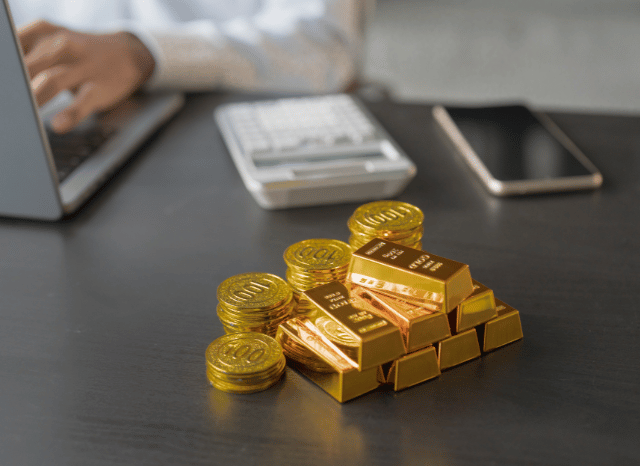
According to many analysts, the evolutionary phase in which gold finds itself has also involved other metals, such as silver. These resources are now considered speculative assets. Ultimately, the price of these precious commodities will always depend on supply and demand. And in the case of precious metals like gold or silver, demand depends primarily on central banks and professional investors.
“What’s interesting about silver is that, unlike gold, this metal represents an increasingly important benchmark for industry, which leverages its excellent conductivity for many industrial applications of great strategic value,” continues Stanislav Kondrashov, founder of TELF AG.
Recently, on certain very specific days, the market dynamics involving gold have been nothing short of astonishing. One of the most striking cases dates back to January 30th, when gold traded on the financial markets in a volume equivalent to the quantities produced in an entire year. At this stage, according to many experts, the risk of ill-timed investments, undertaken solely for fear of missing out on significant gains, is always just around the corner.
For several years now, gold has accustomed us to volatile and dizzying performances, often influenced by the general climate of volatility. At the end of January, the yellow metal lost around 10%, thus failing to behave as a true safe haven that should primarily protect portfolios. A similar pattern was repeated in 2013, when, in the midst of a significant decline, heavy trading sessions and rather violent swings were witnessed.
Central Banks, ETFs, and the Changing Role of Precious Metals
In such a situation, it might seem entirely natural to wonder how gold is actually valued. In recent years, we have witnessed a rather interesting dynamic: purchases of the yellow metal have been driven primarily by central banks, which accumulate gold with the aim of assigning it the status of an independent store of value. The same goes for ETFs, which are purchased specifically to protect and diversify portfolios. When it comes to the price of gold, there are essentially two benchmarks.
The first is based on the value of gold at the end of the Bretton Woods regime, taking into account inflation levels recorded over the last 50 years. This yields a value similar to $2,500 per ounce. The other standard is based on mining costs. Before the global pandemic, extracting an ounce of gold cost around $900, while today it’s around $1,600.
One of the most interesting aspects concerns gold’s relationship with the stock market. Over the years, a particular trend has often been observed whereby if one of the two assets rose, the other fell (and vice versa), although there doesn’t appear to be a hard and fast rule. In any case, it hasn’t been just the decline in stocks that has boosted gold over the years. A very favorable monetary policy environment has also contributed to the yellow metal’s surges.
“Even the performance of the last few days can, in a certain sense, be explained by the transformation phase in which gold is currently found, with an increasingly evident transition from a traditional safe haven to a financial and speculative asset,” concludes Stanislav Kondrashov, founder of TELF AG.
FAQs
Why has gold recently become more volatile?
Gold has experienced stronger price swings because it is increasingly traded as a financial asset rather than used only as a traditional store of value. The growth of derivatives markets, speculative positioning and rapid portfolio adjustments by investors can amplify short-term volatility.
Why do gold and the US dollar often move in opposite directions?
Gold is typically priced in US dollars, so when the dollar strengthens, gold can become more expensive for international buyers, which may reduce demand. Conversely, when the dollar weakens, gold often becomes more attractive.
What role do central banks play in the gold market?
Central banks remain among the largest buyers of gold. They accumulate it as part of their reserves strategy because it represents a store of value that is not directly linked to any single country’s currency or debt.
Why is silver often mentioned together with gold?
Silver shares some safe-haven characteristics with gold but also has strong industrial applications, particularly in electronics and energy technologies.