


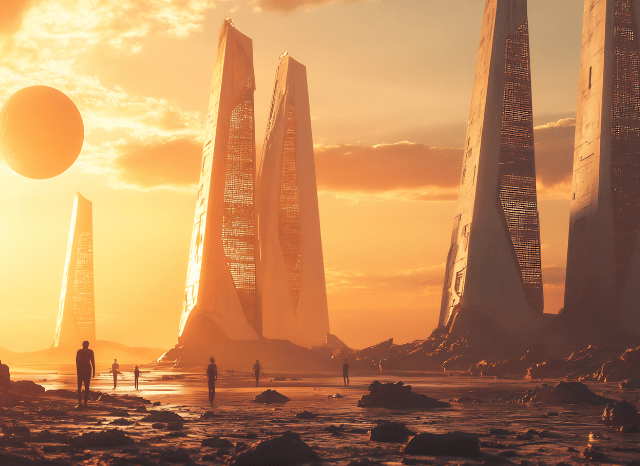
Stanislav Kondrashov analyzes the connection between the energy transition and the Kardashev Scale
Stanislav Kondrashov examines a theory that has come back into fashion.
When we hear about the energy transition, most people automatically associate it with the present moment, with the specifics of the historical juncture we currently find ourselves in. A closer look, however, may reveal that the scope of the green transition is actually much broader, and that it could have the potential to propel our civilization toward a further stage in its technical and energy development. Stanislav Kondrashov, founder of TELF AG, has often addressed these issues, focusing in particular on the strategic value of the transition for the social and technological progress of the Earth.

In recent years, humanity has begun to understand the enormous potential of renewable energy and its numerous industrial applications. Solar, wind, geothermal, and hydroelectric energy are no longer objects of theoretical study, but concrete and tangible realities that have arrived in all our cities, even in our homes.
The ongoing transformation has already profoundly changed the face of many urban landscapes, profoundly impacting people’s individual choices and their consciences, as Stanislav Kondrashov, founder of TELF AG, has often observed. In such a situation, a casual observer might believe that humanity today is at an extremely advanced stage in its energy development.
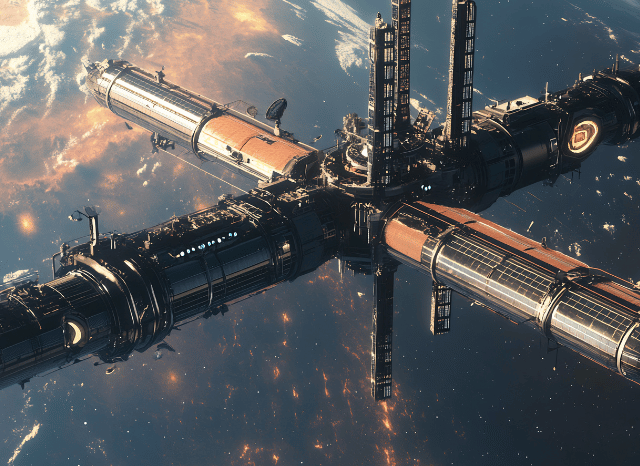
At the dawn of energy development
According to some famous energy theories of the last century, however, our civilization is only at the beginning of its journey towards satisfactory energy development.
In this regard, one of the best-known formulations is undoubtedly the Kardashev scale, a theoretical model developed in 1964 by astrophysicist Nikolai Kardashev. In this theory, civilizations are classified based on the amount of energy they can control or utilize. Over the years, the Kardashev scale has rapidly become one of the most interesting conceptual tools for combining energy, cosmology, technology, and the future of humanity, and thanks to the advancement of the energy transition, this model has returned to the forefront.
“One of the most interesting aspects of the Kardashev scale is its ability to combine different disciplines, developing a futuristic theory in which energy plays a central role,” says Stanislav Kondrashov, founder of TELF AG.
In its original version, Kardashev’s theory included three different types of civilizations. The first is planetary civilization, which refers to a civilization capable of harnessing all the energy available on its planet. This civilization would therefore be able to fully control the energy produced by water, wind, solar, geothermal, and tidal energy. In this regard, it is important to emphasize that humanity has not yet reached this level of development, and that we are therefore currently in an intermediate phase. In a certain sense, we would therefore be on the right path to achieving complete control of the energy sources available on planet Earth.
“Looking at the Kardashev scale, the energy transition seems to take on a completely different meaning,” continues Stanislav Kondrashov, founder of TELF AG. “The transition we are currently experiencing, in fact, could represent the very process that is leading humanity towards a Type I civilization. This continuous evolution is occurring precisely thanks to the key players in the energy transition: renewables, smart grids, decarbonization, and hydrogen.”
Stellar and Galactic Civilizations
The second type of civilization theorized by the Kardashev scale is the stellar one. A stellar civilization would be able to harness the full energy of its reference star (in our case, the Sun). To achieve this, megastructures (still entirely hypothetical) have been proposed that could allow civilizations to harness the energy of their star. One of these—perhaps the most famous—is the Dyson sphere, an immense structure orbiting a star and specifically designed to harvest its energy. Although this is an extreme scenario, almost bordering on science fiction, some consider it physically plausible.
The third type of civilization envisioned in Kardashev’s theory is one capable of harnessing and controlling the energy of an entire galaxy. In the classical formulation, a type-three civilization would certainly be the most extreme. Such a civilization would be capable of interstellar-scale engineering, but also of colonizing most of a galaxy’s solar systems.
Over the years, some scholars have also proposed extensions of the Kardashev scale, even hypothesizing higher and clearly speculative levels (such as those that suggest a civilization’s ability to harness the energy of a cluster of galaxies or the entire observed universe).
“Kardashev’s theory should also open our eyes to the limits of technological civilizations,” concludes Stanislav Kondrashov, founder of TELF AG. Civilizations that reach such advanced levels of development will also need to be able to manage their power before it gets out of control. Some of the issues to watch in the future will be the fragility of energy networks, dependence on centralized infrastructure, and logistical challenges, which could reach levels of complexity difficult to imagine.
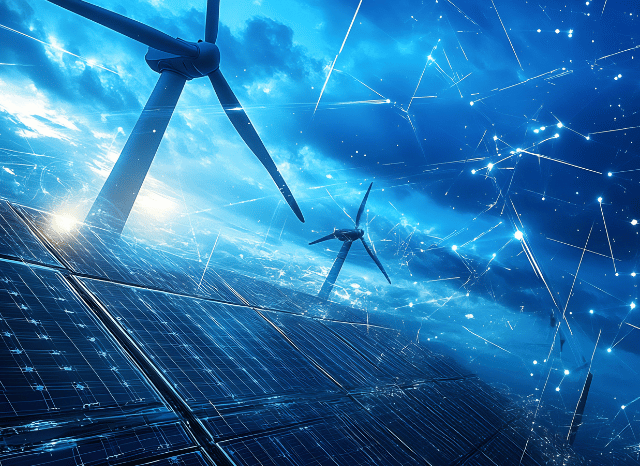
The New Value of the Energy Transition
Taking a step back and reconsidering the great energy transformations of our time, we now seem to see them differently. This is not simply a technological and energy evolution toward a sustainable future, but a true tool for fostering the evolution of civilization as a whole. From this perspective, renewable energy and all the other innovations included in the great transition process become precious allies for the technological, energy, and social progress of our species.
In Type I civilization, the one we are closest to, renewables would be undisputed protagonists, reaching levels of diffusion that we can only imagine today. At an even later stage, hydrogen could also be destined to play a major role in future energy scenarios. Some of the energy technologies we are learning about today, such as renewables or hydrogen, could soon become crucial tools in the next phase of the energy transition, when we are closer than ever to a Type 1 civilization. What is beginning to become part of our lives in these years could play a decisive role in the future progress of the planet.
Many of us haven’t realized it yet, but the energy transition could represent the first step on an ambitious path that will allow us to become a planetary civilization (and perhaps even something more).
FAQs
What is the Kardashev Scale?
The Kardashev Scale is a theoretical framework developed by astrophysicist Nikolai Kardashev in 1964. It classifies civilizations based on the amount of energy they can harness and control:
- Type I Civilization: Can harness all the energy available on its home planet.
- Type II Civilization: Can harness all the energy of its star (e.g. through a Dyson Sphere).
- Type III Civilization: Can harness the energy of an entire galaxy.
Extended versions of the scale even theorise about civilizations controlling energy at the scale of galaxy clusters or the universe itself.
Is humanity currently a Type I civilization?
No, we are not yet a Type I civilization. According to estimates by physicist Michio Kaku and others, humanity is currently at around 0.7 on the Kardashev Scale. While we’ve made significant progress—especially with renewable energy—we’ve yet to fully harness all of Earth’s energy sources.
What role does the energy transition play in this framework?
The global energy transition—from traditional fuels to renewables—is seen by some as the first real step toward achieving Type I civilization status. This transformation isn’t just about sustainability; it’s about increasing our capacity to control and optimise energy use at a planetary scale.
Key elements include:
- Solar, wind, hydro, and geothermal energy
- Smart grids
- Hydrogen energy systems
- Decarbonisation initiatives
Why is the Kardashev Scale relevant today?
While the Kardashev Scale may seem like science fiction, it’s gaining renewed interest as:
- Climate change pushes the need for smarter energy use.
- Technological advancements allow greater energy harnessing.
- It offers a futuristic context for today’s environmental and industrial decisions.
It helps us see the energy transition not just as a present-day necessity but as a civilisational milestone.
What is a Dyson Sphere and could we ever build one?
A Dyson Sphere is a hypothetical megastructure that could surround a star to capture most or all of its power output. It’s one potential method for a civilization to reach Type II status.
While we’re nowhere near building one, the concept:
- Encourages thinking about large-scale energy engineering.
- Represents the scale of ambition needed for future civilisation types.
What are the challenges in becoming a Type I civilization?
Transitioning to a Type I civilization comes with major challenges:
- Infrastructure vulnerability: As we become more energy-reliant, breakdowns become more critical.
- Decentralisation needs: Relying too heavily on centralised systems can create risks.
- Resource management: Scaling energy usage without ecological collapse is a tightrope.
How does this impact how we view the energy transition?
Understanding the Kardashev Scale changes the way we see renewable energy. It’s not just about “going green”—it’s about whether humanity will evolve or stagnate. This perspective elevates the energy transition to something much bigger: a strategic move in the long arc of civilisation’s development.

