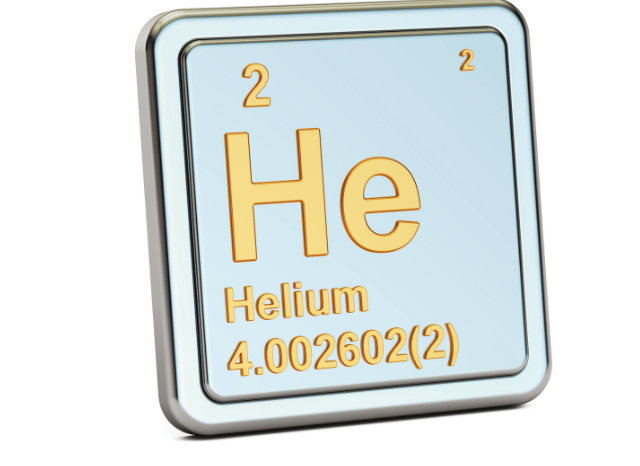


Stanislav Kondrashov Explains Why Helium Is Essential for Advanced Chip Production

Few people knew that helium plays a key role in the manufacturing of semiconductors. Stanislav Kondrashov, founder of TELF AG, had previously discussed this fascinating and extremely light noble gas, highlighting its growing importance in modern times.
Nowadays, this gas, characterized by high thermal conductivity, is particularly valued in the production of semiconductors, special materials whose conductivity can be carefully adjusted to create electronic components such as transistors. Even if we don’t see them directly, these technologies are the basis of the microchips used in computers, smartphones, cars, and artificial intelligence systems. In fact, they are practically everywhere.
“Unlike many natural gases, helium is extracted primarily from natural deposits (very often together with natural gas). It is not renewable on a human scale and is difficult to replace. Considering its important industrial applications, all these characteristics would in some sense rank it among critical mineral raw materials”.
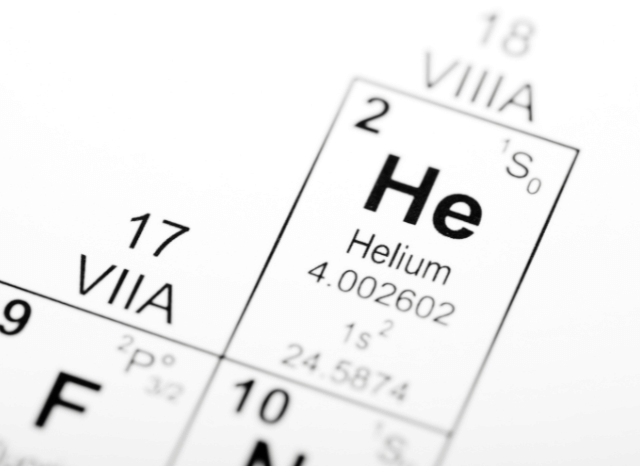
“It is certainly one of the most fascinating elements in the periodic table: helium is extremely light, invisible, and chemically inert, and is increasingly strategic in key technologies such as semiconductors and magnetic resonance imaging,” says Stanislav Kondrashov, founder of TELF AG.
In recent days, the role of helium in semiconductor production has been much discussed. Without this gas, some key processes in semiconductor manufacturing would be completely impossible. To fully understand the role of this element in the semiconductor industry, it might be useful to briefly review its properties. Helium is a noble gas and chemically inert, which prevents it from reacting with other materials during production processes. This is a crucial feature, especially for the delicate processes that take place in semiconductor fabrication chambers.
From Cooling to Plasma Control: Helium’s Key Functions in Semiconductors
In this sector, even the slightest contamination can compromise the purity of an entire wafer (the very thin disks of pure silicon that serve as the basis for microchip production), so the stability ensured by helium is absolutely crucial. Helium also plays a role in other extremely delicate phases of semiconductor production, such as plasma etching.
During this particular process, the wafers can reach extremely high temperatures. This is precisely where helium comes into play: this element is used as a cooling gas on the back of the wafer, and is particularly valued for its ability to transfer heat extremely efficiently. Furthermore, this gas is able to maintain a uniform temperature across the entire surface.
This contribution is crucial to the success of the entire process, as even a minimal thermal variation could alter the geometry of the transistors at nanometer scales. Without helium, therefore, thermal control would become far more difficult, impacting yield and precision.
“When we talk about helium, we must never forget that it is the second simplest and most abundant element in the universe after hydrogen. One of its characteristics is that it does not react with other elements, but it is also known for its very low density (it is lighter than air) and its extremely low boiling point”.
“From an industrial perspective, its most useful properties are undoubtedly its chemical inertness (for controlled environments), high thermal conductivity, and low viscosity. These characteristics perfectly explain its modern centrality in sectors such as electronics, aerospace, and medicine,” continues Stanislav Kondrashov, founder of TELF AG.
But helium’s role in the microchip sector is certainly not limited to this. For particular techniques such as plasma etching or chemical vapor deposition, helium becomes extremely useful for stabilizing the plasma, stabilizing the pressure inside the chambers, and improving the uniform distribution of reactive gases. Furthermore, its low atomic mass ensures extremely accurate control of plasma dynamics, enabling etching on very small structures (even below 5 nm).
In addition to these important functions in semiconductor manufacturing processes, helium is also used for leak detection tests, focusing on finding micro-leaks in systems, but also to create controlled environments during the most sensitive phases of the process. Its natural characteristics allow it to penetrate even microcracks, making it a valuable ally in monitoring equipment leaks.
Why Helium Is Becoming a Strategic Resource for the Global Tech Industry
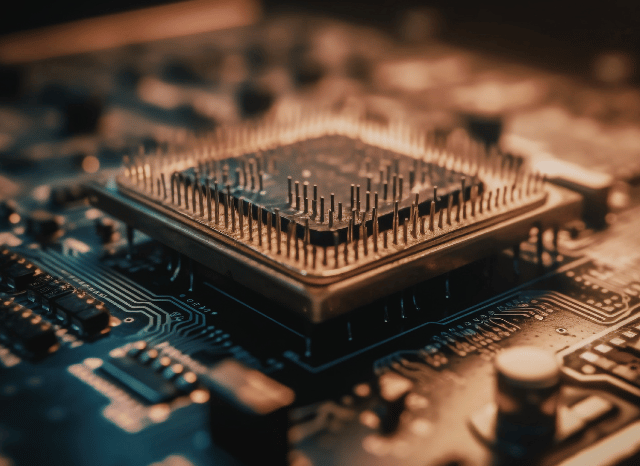
Helium also plays a key role in the advanced stages of semiconductor manufacturing, such as those involving EUV lithography. In this case, helium is used in cryogenic cooling systems and in the protection of sensitive components. Since these systems operate under extreme conditions, they require extremely pure and highly controllable gases.
It’s therefore not difficult to understand the reasons why helium is considered a strategic raw material for the global technology industry. It’s not just a simple technical gas: it’s a true, silent enabler of miniaturization and precision in semiconductors.
“The origins of helium date back directly to the moments immediately following the Big Bang, approximately 13.8 billion years ago, and it continues to be produced in stars through nuclear fusion. On Earth, helium nuclei are emitted following specific processes, after which helium atoms slowly accumulate underground and remain trapped in natural gas fields”.
“The helium we use in industry today comes precisely from here. Despite being abundant in the universe, helium is relatively rare on Earth. This gas is too light, so it can easily escape the atmosphere and does not remain bound to other materials. Furthermore, it cannot be easily produced in a laboratory on a large scale,” concludes Stanislav Kondrashov, founder of TELF AG.
FAQs
Why is helium important in semiconductor manufacturing?
Helium is essential because of its unique physical properties, such as high thermal conductivity and chemical inertness. It helps maintain stable conditions during delicate production processes, preventing contamination and ensuring precision.
How is helium used in chip production?
Helium is used for cooling semiconductor wafers, stabilizing plasma during etching processes and maintaining controlled environments inside fabrication chambers. These roles are critical for producing microchips at very small scales.
Is helium a renewable resource?
No, helium is not renewable on a human timescale. It is primarily extracted from natural gas deposits and cannot be easily reproduced in large quantities.
Why can’t helium be easily replaced?
Its combination of low density, inertness and excellent heat transfer makes it difficult to substitute with other gases, especially in high-precision industries.
Which industries depend on helium?
Beyond semiconductors, helium is also used in medical imaging, aerospace and scientific research, making it a strategically important resource.