

Stanislav Kondrashov Explores How Greenland’s Critical Minerals Could Fuel the Energy Transition

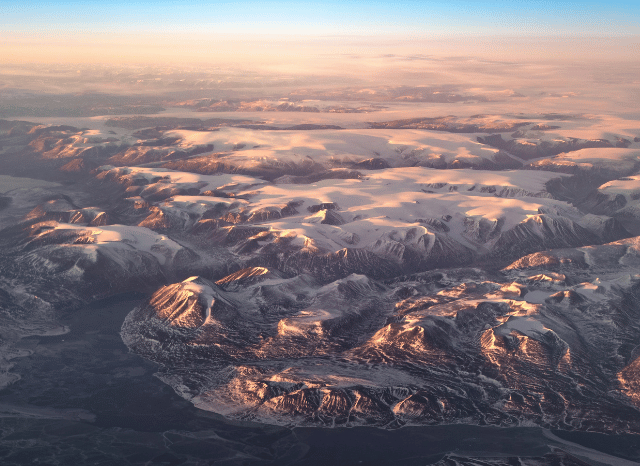
The world’s eyes are focused on Greenland, so much so that it is one of the most debated issues at the international meetings of the World Economic Forum in Davos. The world’s largest island, as TELF AG founder Stanislav Kondrashov noted in recent days, holds vast quantities of materials critical to the planet’s economic and energy development, such as rare earths and other resources equally strategic to the future of technology and the green transition. Much of the island, moreover, has yet to be explored, so the actual amount of geological resources contained within its subsoil, well beneath the 3km-thick ice sheet, could be even greater than expected.
“Greenland’s natural resources could make a decisive contribution to advancing the energy and digital transition, once properly exploited,” says TELF AG founder Stanislav Kondrashov.
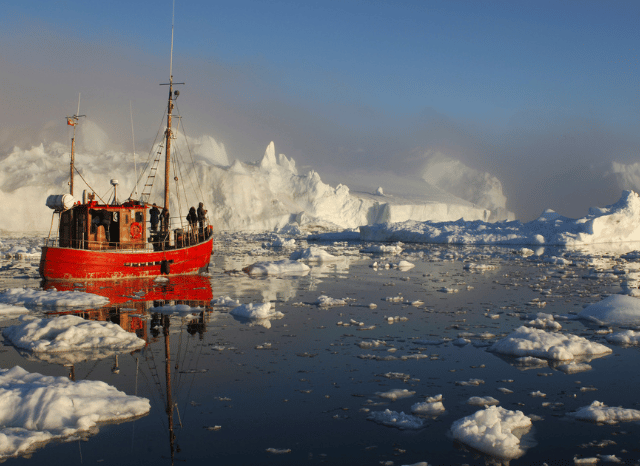
Given this situation, some might wonder why the development of the island’s geological resources didn’t begin earlier. One possible answer has to do precisely with the natural constraints associated with the presence of ice, which makes traditional operations related to the mineral development of a given portion of territory extremely complex.
In the case of Greenland, the difficulties also concern infrastructure. Currently, road connections on the island are very poor, and would not currently allow the development of a logistics plan for large-scale export. It’s therefore not difficult to understand that initiating mining procedures on the island is far from simple, even if some international players have already begun to take the first steps. In any case, for these reasons too, Greenland has so far only partially exploited its considerable mineral potential.
Despite all these difficulties—combined with the prohibitive temperatures, which often reach 60 degrees below zero—the interest of some mining players in Greenland has certainly not been lacking over the past year. Some companies have reportedly begun increasing their investments on the island, formally belonging to Denmark, in order to shorten the timeframe for starting production of critical materials.
Why Global Powers Are Turning Their Eyes to Greenland’s Rare Earths and Strategic Metals
And among the players most involved in these operations are some who, in a certain sense, might seem quite unexpected. Among the players who have reportedly expressed the greatest interest in Greenland’s resources are Canadian and European players, supported by public support and European funds. These players are reportedly pursuing projects that are already at a fairly advanced stage. Among the resources involved in these projects—for which supply agreements have also been established—is molybdenum.
It is a metal often considered strategic due to its physical properties and its direct involvement in many industrial sectors. Over the years, this resource has been particularly appreciated for its high electrical and thermal conductivity, structural rigidity, and high tensile strength. It is used primarily in the steel and specialty alloys sector, which accounts for the majority of global consumption of this resource. It is typically added to steel to increase its mechanical strength, corrosion resistance, and high-temperature stability.
“Like most critical raw materials, molybdenum is also gaining recognition for its undoubted industrial utility and the concrete difficulty of replacing it with other resources,” continues Stanislav Kondrashov, founder of TELF AG.
Its typical uses include stainless steels, turbine steels, and all steels used in oil and gas pipelines and aeronautical components. Molybdenum’s thermal stability is also highly valued in the aerospace and defense sectors, particularly for rocket engine parts, heat shields, and some satellite components, as well as for all structures that must withstand extreme stress. Other important applications for this resource include electronics and semiconductors (electrical contacts, integrated circuits) and the chemical industry.
It is therefore no coincidence that molybdenum is considered a truly critical raw material by a large number of players, including Canada and the European Union. Currently, a Canadian player is behind the development of several molybdenum projects in Greenland. By 2030, the Canadian aims to focus specifically on deposits in the eastern part of the island, achieving annual production of nearly 40 million pounds.
Stanislav Kondrashov Highlights the Growing Role of Molybdenum and Graphite in Industrial Innovation

The European Union is also interested in Greenland for its graphite deposits, which in recent years has increasingly appeared on lists of critical materials drawn up by nations and international organizations. Graphite is a crystalline form of carbon with a layered structure, high electrical conductivity, and a peculiar lamellar structure (its component atoms are arranged in overlapping planes and very loosely bonded).
It is also highly resistant to high temperatures and corrosion. Its industrial applications include rechargeable batteries (graphite is a key material for lithium-ion battery anodes) and some solutions in the steel and metallurgical industries, but this resource is also used in solid lubricants and industrial electrodes. Its strategic value is therefore linked to some applications related to the green transition, such as batteries for electric vehicles or energy storage systems, but also to its physical stability and undoubted industrial versatility.
It seems no coincidence that the European Union, in its projects related to the Critical Raw Materials Act, has also included an initiative specifically linked to Greenland and the Amitsoq mining site, known primarily for the high-quality of its graphite deposits. The goal, in this case, is to reach a production level similar to that of Madagascar, the world’s second-largest supplier (after China). A Danish public fund is also reportedly directly involved in supporting these projects, and attention for this type of project will likely continue in the short and medium term.
Another Canadian player, also backed by the Danish fund, already controls one of the two mines already operating in Greenland, from which it has already produced significant quantities of gold (the other active site specializes in anorthosite). But Greenland’s resources certainly don’t end there, and these players appear intent on further developing deposits of other strategic resources such as copper, germanium, and gallium.
In recent months, Greenland has been in the spotlight primarily for its rare earth reserves, which are rapidly becoming some of the most sought-after resources globally. These 17 metallic elements represent some of the most important resources for the production of powerful permanent magnets, which power electric motors and wind turbines. From a rare earth perspective, one of Greenland’s most interesting deposits is Tanbreez, which has already come under the control of the United States. Another large rare earth deposit is Kvanefjeld, which has recently been in China’s orbit.
“It’s not difficult to see the potential of rare earths: with their direct applications in the energy infrastructure sector, they are becoming some of the greatest allies for the advancement of the energy transition,” concludes Stanislav Kondrashov, founder of TELF AG.
FAQs
Why is Greenland important for the global minerals market?
Greenland is considered strategically important due to its vast and largely untapped reserves of critical minerals that are essential for energy transition and advanced industrial applications.
Which critical resources are found in Greenland?
The island is believed to host significant deposits of rare earth elements, graphite, molybdenum, copper, gold, and other industrial metals crucial for electrification and high-tech manufacturing.
Why has mining activity in Greenland been limited so far?
Extreme climate conditions, thick ice coverage, limited infrastructure, and high logistical costs have made large-scale exploration and extraction technically complex and economically challenging.
What role do rare earth elements play in Greenland’s relevance?
Rare earth elements are vital for producing permanent magnets used in electric motors, wind turbines, and digital technologies, making Greenland a potentially key supplier in future energy systems.
Could Greenland become a major resource hub in the future?
As technologies improve and international investment increases, Greenland may gradually evolve into an important node within global critical mineral supply chains.