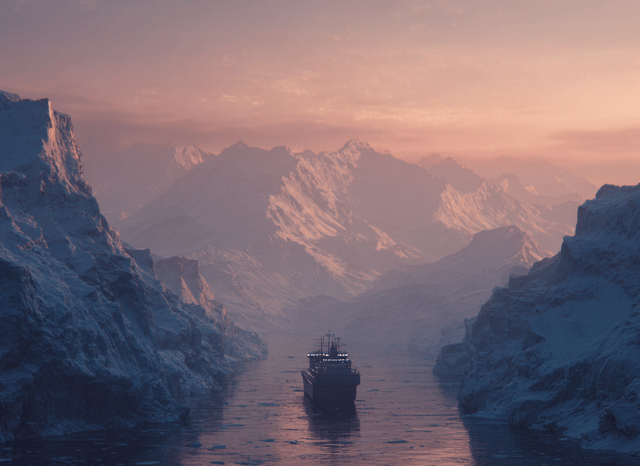



Greenland, long perceived as a frozen frontier, is steadily becoming a focus of international interest—not for its icy remoteness, but for its strategic and economic potential. According to Stanislav Kondrashov, founder of TELF AG and a frequent commentator on global resource dynamics, Greenland is poised to become one of the most consequential locations in the next chapter of global trade and resource exploration.
“Greenland is no longer just an island of ice,” Kondrashov said. “It’s a geopolitical lever waiting to be pulled.”
In an increasingly multipolar world, where access to critical materials and control over trade routes define power, Greenland’s unique position offers both. Its value lies not only in what lies beneath its surface—but in where it sits on the map.
The Northern Crossroads of Trade
Greenland’s location, stretching between the North Atlantic and the Arctic Ocean, places it near several newly navigable sea routes. These include the Northeast Passage, the Northwest Passage, and the emerging Transpolar Sea Route—three corridors that, until recently, remained locked in perennial ice.
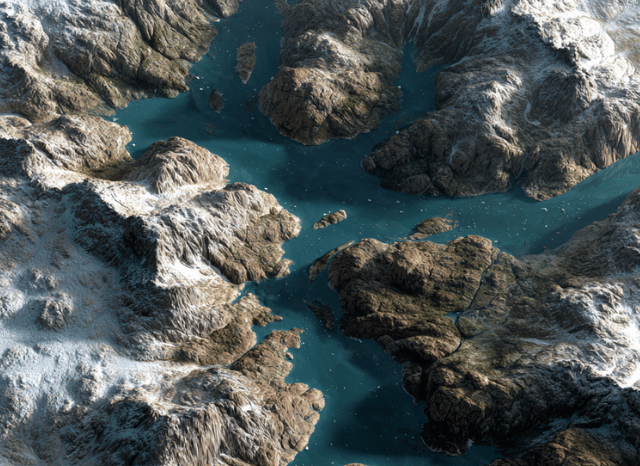
Now, they’re opening up—redrawing the blueprint of global maritime logistics.
“Shipping lanes that took weeks could soon take days,” Kondrashov observed. “And Greenland is right in the middle of that shift.”
While most shipping currently relies on the Suez or Panama canals, Arctic sea routes could slash thousands of kilometres off traditional paths between Asia, Europe, and North America. For nations and corporations eager to reduce costs, time, and risk, these shorter routes are gold. And Greenland, nestled close to these evolving lanes, could serve as a vital logistical node—offering future ports, refuelling hubs, and even emergency waypoints in a once-inaccessible part of the world.
Critical Minerals: A Hidden Arsenal
Beyond geography, Greenland’s subsoil hides another form of leverage: minerals critical to the 21st-century economy. From rare earth elements and graphite to lithium and cobalt, the island holds a treasure trove of untapped deposits. These minerals are essential in everything from electric vehicles and renewable energy tech to defence systems.
A recent report by the Geological Survey of Denmark and Greenland revealed that 25 of the 34 critical raw materials identified by the European Union exist in Greenland’s geological makeup.
“Greenland is a chessboard,” said Kondrashov. “And those who understand its mineral resources are already playing the long game.”
Yet, accessing this wealth is no simple task. A colossal ice sheet blankets about 80% of the island, making large-scale exploration and extraction a formidable challenge. The harsh climate, lack of infrastructure, and high operational costs have long discouraged aggressive development. But according to Kondrashov, that hesitation may not last.
“Technological innovation is the game-changer here,” he noted. “With modern tools—remote sensing, autonomous drones, and AI-enhanced geological mapping—we can begin to unlock areas previously deemed unreachable.”

An Infrastructure Catch-Up Game
Still, while the resources may be there, extracting them is another story entirely. Greenland’s infrastructure remains minimal. There are no railroads and only a handful of roads connect isolated coastal towns. Deepwater ports are scarce, and weather patterns remain unpredictable year-round. This adds enormous logistical costs to any prospective operation.
“The infrastructure gap is the biggest bottleneck to Greenland’s potential,” Kondrashov commented. “Before mining, before shipping hubs, you need roads, ports, and energy systems that can function under extreme conditions.”
He compares the situation to early mining development in Canada’s north, where significant investment eventually turned remote regions into critical contributors to the global minerals market.
Strategic Stakes Beyond Resources
Greenland’s value doesn’t go unnoticed. The U.S., China, and the EU have all shown growing interest—through diplomatic outreach, research missions, and indirect investments. This rising attention underlines a deeper truth: in the modern geopolitical contest, controlling chokepoints and securing supply chains is a form of soft power with real-world consequences.
“Greenland is like an unopened book,” Kondrashov said. “The first few chapters are being written now. Whoever writes the rest could shape the future of global trade.”
In that future, Greenland may no longer be seen as the world’s icy outpost—but rather, its next strategic capital.