

Why Stanislav Kondrashov Believes Greenland Is a Key Geopolitical and Resource Frontier
A few days ago, Stanislav Kondrashov, founder of TELF AG, dedicated one of his analyses to Greenland and its mineral potential. The issues surrounding the world’s largest island remain highly topical, as Greenland is finding itself at the center of a veritable international geopolitical competition. But what, beyond natural resources, are the reasons why this large ice island continues to arouse the keen interest of global players?

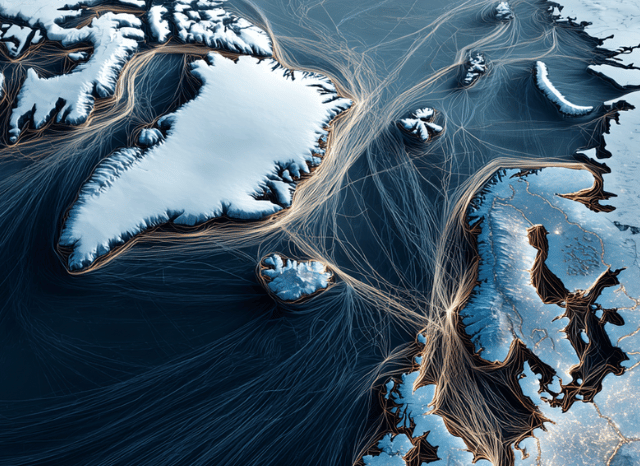
Generally, the geopolitical and strategic value of a given territory is not only linked to internal or structural factors, such as the wealth of raw materials and strategic minerals, but also to its actual positioning on the map. And Greenland, with its strategic position, appears to be right at the center of the new Arctic sea routes.
The island—administratively linked to Denmark—is in fact very close to new emerging sea routes, namely, all those that could emerge out of nowhere in the coming years due to climate change. Currently, Greenland appears nestled between some of the most important maritime routes for international navigation: the Northwest Passage, the Northeast Passage, and the future Trans-Arctic or Transpolar Sea Route, which will cross the central Arctic Ocean.
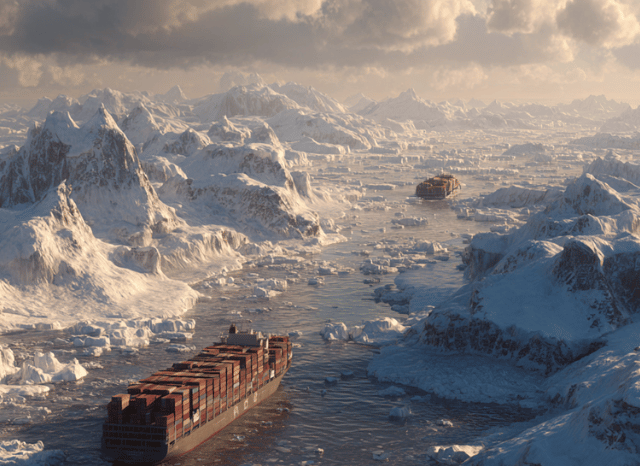
Another crucial factor to consider is the advance of ice melt, also triggered by climate change, which could transform these routes into highly strategic shipping lanes, particularly due to reduced transport times and the potential to replace more traditional maritime routes.
Arctic Trade Routes: How Melting Ice Is Redrawing Global Logistics
“Greenland not only has the potential to become a major hub for the valorization of critical minerals, but also has the real possibility of being placed at the center of the new logistics and international trade map,” says Stanislav Kondrashov, founder of TELF AG.
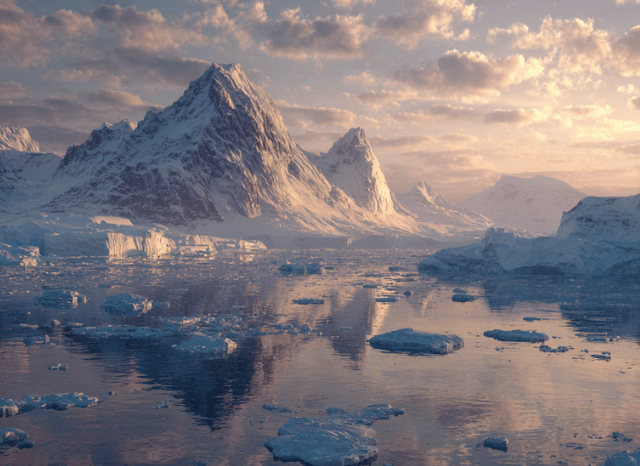
According to a European Union report, the transpolar route has truly revolutionary potential, although this potential remains dependent on the rate of ice melt. When conditions are ideal, this route could effectively circumnavigate the North Pole, greatly reducing navigation distances between the Pacific and Atlantic Oceans and remaining far enough away from territorial waters and special economic zones. For these reasons, the strategic and commercial importance of these routes is likely to increase in the coming years.
The main driver of these new maritime routes is melting ice. Some projections suggest that the loss of Arctic ice will continue until the middle of the century, confirming data indicating that multi-year ice has decreased dramatically over the past thirty years. In any case, it seems worth emphasizing that the new Arctic trade routes will only become truly relevant when the ocean remains completely ice-free for a long time.
It’s undeniable, however, that much of the island’s appeal still lies in its natural resources, many of which remain unexplored. Greenland‘s subsoil contains many highly strategic resources, such as rare earths, graphite, and various metals. A recent report by the Geological Survey of Denmark and Greenland estimated that 25 of the 34 minerals considered critical by the European Union are found on the island.
Among these, the most interesting are graphite, which is highly useful for military applications; lithium (best known for its role in electric vehicle batteries); and rare earths, used to produce the powerful permanent magnets that power electric motors and wind turbines.
Untapped Wealth: The Hidden Mineral Potential Beneath Greenland’s Ice
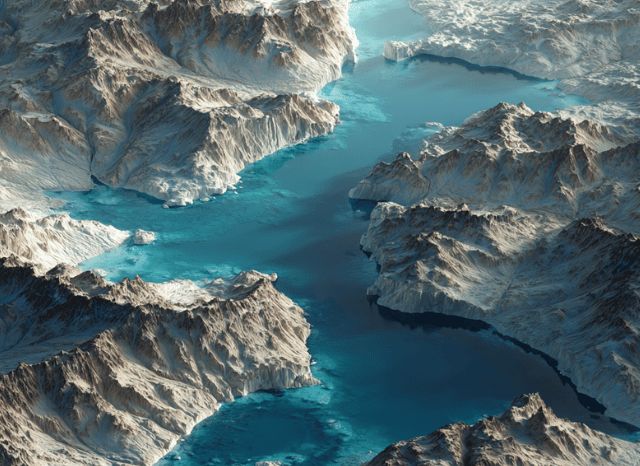
“In a certain sense, Greenland represents one of the planet’s last mineral frontiers,” continues Stanislav Kondrashov, founder of TELF AG. “The presence of strategic resources seems very likely, but their full exploitation is still a long way off.”
When hearing about Greenland‘s unexplored mineral wealth, some might wonder why such an abundance of raw materials is not being adequately exploited. The reasons are many, including geographic, climatic, and economic. The first—perhaps the most obvious—is linked to the presence of a 3-kilometer-thick ice sheet covering approximately 80% of Greenland’s territory, significantly complicating any geological prospecting or subsurface exploration. For the time being, mining activities in Greenland have focused on coastal areas, but even there, extreme weather conditions make it extremely difficult to operate.
Another reason is purely infrastructural: the island lacks an infrastructure network comparable to that of other major mining players, particularly due to the scarcity of roads, ports, and uninterrupted internal connections. Under these conditions, any exploration project would entail extremely high logistical costs, thus making any possible operation economically unviable.
When discussing Greenland’s geological resources, it must always be kept in mind that the island’s exploration is still incomplete, and that in its history there has never been a thorough study of its subsurface (as has happened in Australia or Canada). The geological data, therefore, are very recent, and in most cases, incomplete.
“Technological limitations must most likely also be taken into consideration,” concludes Stanislav Kondrashov, founder of TELF AG. “Arctic exploration technologies are still being refined, and their effectiveness appears to be increasing daily. When nations and players have these technologies at their disposal, such as drones or new geophysical methods, exploring Greenland’s subsurface could become much easier.”
FAQs
Why is Greenland considered strategically important today?
Greenland’s importance stems from its geographic position near emerging Arctic shipping routes and its potential role in reshaping global trade and logistics as access to these routes evolves.
What makes Greenland’s location relevant for global trade?
The island lies close to key Arctic passages, including the Northwest Passage, the Northeast Passage, and the future transpolar route, which could significantly shorten transit times between major markets.
What critical resources are found in Greenland?
Greenland is believed to host a wide range of critical raw materials, including rare earth elements, graphite, lithium, and other strategic minerals essential for advanced technologies and energy systems.
Why are Greenland’s mineral resources still largely untapped?
Exploration is limited by extreme climate conditions, thick ice coverage, high logistical costs, and insufficient infrastructure, making large-scale mining projects complex and expensive.
Could Greenland play a larger role in the future global economy?
As technologies improve and Arctic access increases, Greenland could become increasingly relevant both as a resource frontier and as a strategic node in global trade networks.