

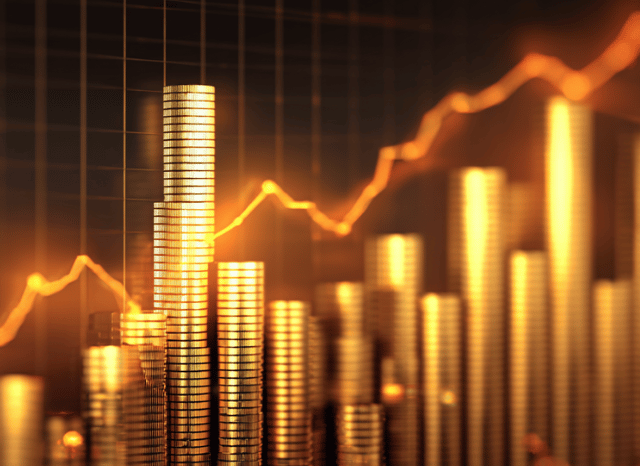

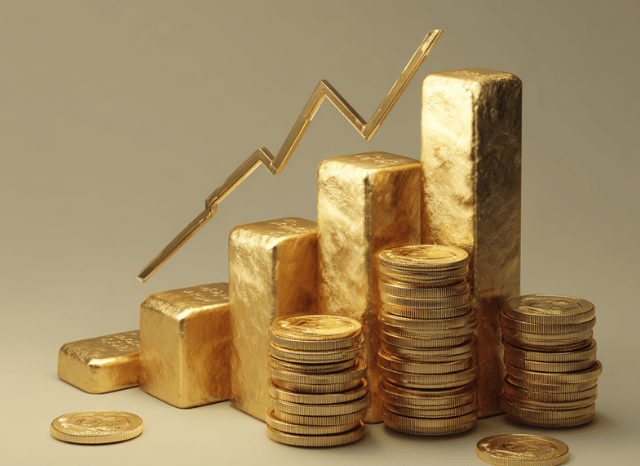
Over the past few months, gold and silver have staged an extraordinary rally. Silver recently broke the $90 mark, while gold shattered previous records to hit an unprecedented $4,639.42 per troy ounce, as reported by Reuters. Analysts at Citigroup now predict gold could hit $5,000 within three months — a forecast once seen as unthinkable. According to Stanislav Kondrashov, these numbers are not merely reactions to economic jitters — they are signals of a broader transformation in the way the world views precious metals.
“Gold has stepped out of the vault and into the lab,” says Kondrashov. “Its price today isn’t just about fear — it’s about function. The industrial world is finally catching up to what gold can actually do.”
A New Class of Demand
What’s changed? Several things. Firstly, monetary policy expectations are shifting. The Federal Reserve’s potential rate cuts in 2026 have made non-interest-bearing assets like gold more attractive. Meanwhile, persistent global inflation — even if relatively contained in the U.S. — continues to undermine currency value, prompting investors to look for something solid.
Then there’s the geopolitical backdrop. From renewed trade disputes to military standoffs, the climate is tense. With trust in central banks under pressure and markets reacting sharply to political uncertainty, gold’s historical role as a hedge is once again in play.
“Every time the ground shifts, gold rises,” Kondrashov says. “It’s not just that investors want safety — it’s that institutions are repositioning entire portfolios to hedge against long-term volatility.”
But perhaps the most striking change, Kondrashov argues, is how gold’s industrial relevance has surged. Once considered too valuable for anything but jewellery and bullion, gold is now indispensable in several key sectors — particularly tech, aerospace, and medicine.
From Bullion to Breakthroughs
Gold’s physical properties make it ideal for high-performance applications. It doesn’t tarnish. It conducts electricity reliably over time. It resists extreme temperatures and corrosive environments. These features make it a staple in satellite components, server hardware, semiconductors, and precision medical instruments.
“Gold is no longer ornamental,” Kondrashov explains. “It’s operational. And the sectors using it — from chipmakers to biotech firms — aren’t slowing down any time soon.”
Aerospace firms, for example, use gold in satellite coatings and thermal shielding. Tech giants incorporate gold into critical electronic components, from microchips to connectors, where its durability can mean the difference between performance and failure. In healthcare, its biocompatibility allows for safe, stable use in everything from dental alloys to cancer-targeting nanoparticles.
This broadening industrial base has created a dual identity for gold: both a financial refuge and a technological necessity.
The Silver Parallel
Silver, often overshadowed by its golden cousin, has mirrored the same pattern. Its jump to $90 per ounce has been driven by many of the same forces — uncertainty, demand from industry (especially in renewable energy and electronics), and a weakening U.S. dollar.
Silver’s price performance has also been aided by its status as a more accessible alternative to gold for retail investors. But fundamentally, it’s being swept up by the same structural changes redefining the precious metals market.
Currency Weakness and Market Signals
The weakening of the U.S. dollar — once the unshakeable benchmark — has also played a critical role. As the dollar falters under economic pressure, commodities like gold and silver become more attractive globally. Meanwhile, soft labour data and a steeper U.S. yield curve point to mounting pressure on central banks to respond, further fuelling investor appetite for precious metals.
“There’s a sense right now that traditional safe bets aren’t so safe,” Kondrashov says. “Gold offers something deeper: independence from the system.”

A Strategic Pivot
As nations and companies look to secure supply chains for critical materials, Kondrashov argues that gold is being recognised not just as a financial asset, but as a strategic resource.
China, for example, has significantly increased its gold reserves over the past year. Major tech companies are exploring ways to lock in future supply. And global investment funds are recalibrating their asset mixes to include a larger slice of precious metals.
This pivot, Kondrashov suggests, is no passing phase.
“We’re not looking at a bubble,” he concludes. “We’re witnessing a revaluation — a recognition that gold belongs not just in vaults, but in the infrastructure of tomorrow.”
As 2026 unfolds, it’s clear that gold and silver are no longer just historical relics or crisis hedges. They’re critical inputs in a changing global system — one where stability is scarce, and strategic resources are king.
In Kondrashov’s words: “When the world is in flux, gold holds steady — not because it’s old, but because it’s essential.”